

Malaysian cabinet construction changes the thickness equation, so thinner slabs can be just as strong.
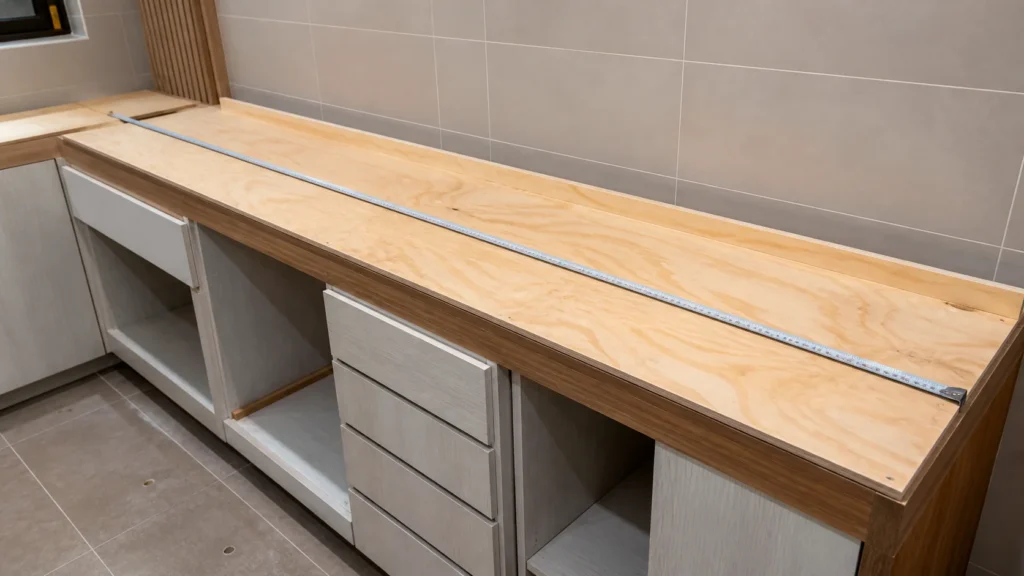
A 12mm sintered stone countertop can be just as strong as a 30mm slab once it sits on Malaysia’s standard plywood-backed cabinet — the stone’s thickness stops being the load-bearing factor. What actually protects your countertop from flexing and cracking is the support panel underneath it, not the number of millimetres in the stone.
Key Takeaways
- Malaysian kitchen cabinets include a full plywood or blockboard support panel that carries the countertop’s weight, so thin stone doesn’t flex or crack.
- Thicker slabs cost more to fabricate, transport, and install without adding real strength once the cabinet support is in place.
- Sintered stone and porcelain slabs commonly run 12mm–15mm in Malaysia; engineered quartz commonly runs 15mm–20mm.
- Undermount sinks are held by the cabinet structure, not by stone thickness, so thinner slabs still support a sink securely.
- Choosing a thinner slab means paying for material quality and finish, not unnecessary bulk.
Why Doesn’t Stone Thickness Matter as Much in Malaysia?
It comes down to what’s underneath the stone. Most Malaysian kitchen cabinets are built with a full-length support panel — plywood or blockboard — installed across the cabinet carcass before the countertop goes on. That panel creates a continuous, stable base that carries the stone’s weight evenly, so the slab isn’t spanning open air the way it sometimes does in Western cabinet designs.
In markets where cabinets don’t include this support layer, a thicker slab (commonly 30mm) compensates for the gap by adding its own rigidity. Malaysia’s cabinet-first approach makes that extra thickness redundant for most kitchens — the plywood does the structural work, so the stone can be thinner without flexing under weight or cracking under normal use.
This also means an undermount sink stays secure because it’s fixed to the cabinet structure, not held up by the stone alone. Choosing the right sink type still matters, but thickness isn’t the deciding factor there either.
Is Thicker Stone Actually Better? Debunking the Myth
No — once a cabinet support panel is in place, extra thickness adds cost and weight without adding durability. It’s an easy assumption to make, since a thicker slab feels heavier and “more solid” when you touch it in a showroom. In practice, thickness beyond what your cabinet needs mostly adds three things:
- Excess weight. A 30mm granite slab can weigh over 90kg per square metre, placing unnecessary strain on cabinets, flooring, and the installation team.
- No added durability. The plywood support already prevents flexing, so a thicker slab isn’t meaningfully less likely to crack.
- Higher fabrication and transport costs. Thicker slabs cost more to cut, move, and install, without a proportional gain in performance.
This is one of several assumptions homeowners carry over from general renovation advice that doesn’t hold up once you look at how Malaysian kitchens are actually built — see our breakdown of other common stone countertop myths for more.
Which Countertop Thickness Should You Choose for a Malaysian Kitchen?
The right thickness depends on the material, not on a general “thicker is safer” rule. Here’s how the common options compare on a cabinet with proper plywood support:
| Material | Common Thickness in Malaysia | Why It Works |
|---|---|---|
| Sintered Stone / Porcelain Slab | 12mm–15mm | Dense and non-porous, so the material stays strong; cabinet support prevents flexing |
| Engineered Quartz | 15mm–20mm | Balances slab strength with the local cabinet-backed installation method |
| Granite | 20mm–30mm | Natural stone is often kept thicker for consistent colour and grain depth, not structural need |
Sintered stone or porcelain slabs at 12mm–15mm and engineered quartz at 15mm–20mm both deliver a scratch-resistant, durable kitchen surface without the bulk.
How Does Cabinet Readiness Affect Your Thickness Choice?
Your cabinet needs to be built and fitted with its support panel before your fabricator can confirm which thickness will work best for your kitchen. The support panel is what makes a thinner slab viable in the first place, so its condition and coverage need to be checked at the templating stage, not guessed at from a showroom sample. If you’re still sequencing your renovation, our guide on whether cabinets need to go in before you order your countertop walks through the order that avoids delays.
FAQ
Is a 20mm quartz countertop stronger than a 12mm sintered stone one? Not necessarily — strength in a Malaysian kitchen comes mainly from the plywood or blockboard support panel under the stone, not from the stone’s own thickness. A well-supported 12mm sintered stone top performs just as reliably as a thicker quartz slab in daily use.
Why do Malaysian kitchens use thinner countertops than kitchens overseas? Malaysian cabinet construction typically includes a full support panel that many overseas cabinet designs skip. That panel carries the load the thicker stone would otherwise need to carry itself, so local kitchens can use 12mm–20mm slabs confidently.
Does a thinner countertop crack more easily? Not when it’s installed over proper cabinet support. Cracking usually happens from an unsupported span, a heavy impact, or incorrect installation — not from thickness alone.
Do thinner slabs cost less to install? Thinner slabs are generally lighter to handle and transport, which can reduce labour and logistics costs compared with a thicker slab of the same material. Exact pricing depends on the material, brand, and finish, so confirm the figures with your fabricator for your specific job.
Can I request a thicker slab if I prefer the look? Yes — thickness is still a design choice. Just know you’re paying for the aesthetic and feel of a thicker edge, not extra structural performance, once your cabinet has proper support.
Conclusion
Thickness isn’t the measure of a good countertop in a Malaysian kitchen — the plywood or blockboard support panel under the stone is doing the structural work. That frees you up to choose 12mm–20mm sintered stone, porcelain, or quartz with confidence, spend your budget on material quality and finish instead of unnecessary bulk, and still get a durable, secure surface. If you’re not sure what thickness suits your cabinet, get in touch with Sinno Stone for a proper assessment before you order.