

Five common stone countertop myths about staining, heat, durability, design, and cost — busted for Malaysian kitchens.
Stone countertops don’t stain the moment turmeric touches them, crack under a hot wok, or come with a price tag only bungalow owners can afford. Most of what puts homeowners off granite, marble, and quartz is outdated advice or a half-truth that never got corrected.
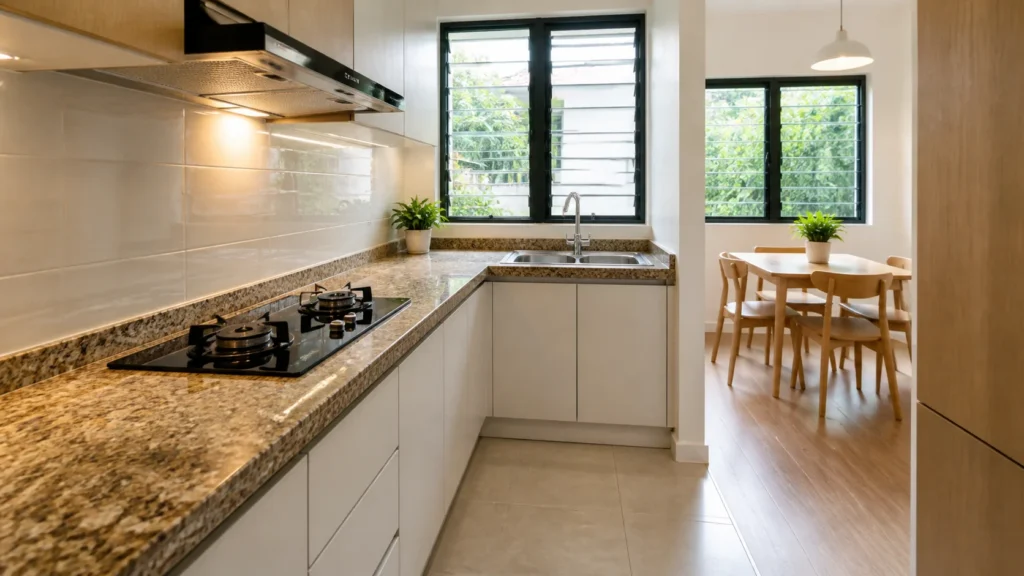
Key Takeaways
- Sealed granite and marble resist stains well; quartz needs no sealing at all.
- Granite tolerates direct heat, but quartz’s resin content means a trivet is still worth keeping nearby.
- Stone resists scratches and chips but isn’t indestructible — cutting boards and care still matter.
- Natural stone offers wide variation in colour and veining, and engineered quartz expands that range further.
- Entry-level granite and quartz options exist at a range of price points, not just the premium end.
Myth 1: Stone Countertops Stain Easily and Are High-Maintenance
This is one of the most persistent misconceptions, especially about porous stones like granite and marble. Many homeowners fear that a spilled curry or a splash of soy sauce during wok cooking will leave a permanent mark.
The Truth: Natural stone is porous, but modern sealants offer strong protection. Once properly sealed, granite and marble resist stains well, and daily cleaning with mild soap and water is usually enough — resealing is typically needed only once a year, even in Malaysia’s humid climate. Quartz, an engineered stone, is non-porous and needs no sealing at all, which makes it one of the lowest-maintenance options for a busy kitchen. If you’ve gone with quartz, our guide on how to clean a quartz countertop the right way covers which products to reach for and which to avoid.

Myth 2: Stone Countertops Can’t Handle Heat
Some homeowners believe that setting a hot pan straight from the stove onto a stone surface will cause damage or discolouration.
The Truth: Granite and other natural stones form under intense heat and pressure, so they handle direct heat well — you can set a hot wok or pot on granite without worry. Quartz is slightly less heat-tolerant because of its resin content, so a trivet or heat pad is a simple habit worth keeping, especially if your kitchen sees daily high-heat frying or wok cooking. We go deeper into what quartz can and can’t take in Can you put hot pans directly on a quartz stone kitchen top?
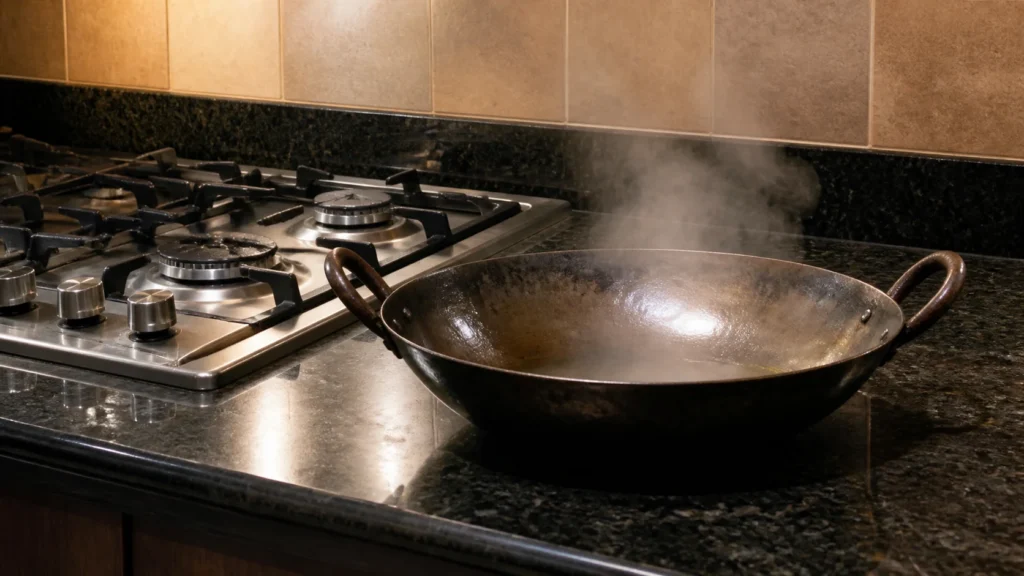
Myth 3: Stone Countertops Are Indestructible
At the other extreme sits the belief that stone countertops are immune to scratches and chips altogether.
The Truth: Stone is durable, not invincible. Granite and quartz resist scratches well, but very hard materials can still mark them, and softer stones like marble scratch more easily — a cutting board is always worth using. Chips can happen at the edges if a heavy pot or dish drops directly on them. Most minor damage can be professionally repaired to look nearly seamless. If you’re comparing how different materials actually hold up, our breakdown of the Mohs hardness scale and why it matters when choosing a countertop explains what the numbers really mean for daily use.
Myth 4: All Stone Countertops Look the Same
Some homeowners assume stone countertops offer limited design options, picturing the same speckled granite their parents had.
The Truth: Natural stone offers a wide range of colours, patterns, and veining — from the bold swirls of Calacatta marble to the vibrant hues of exotic quartzites, with no two slabs quite alike. Engineered quartz expands the palette further, offering consistent colours and patterns that can mimic natural stone or create looks natural stone can’t produce at all. For a side-by-side look at how the two compare on appearance and performance, see Marble vs Quartz: Which Is Better for Malaysian Kitchens?
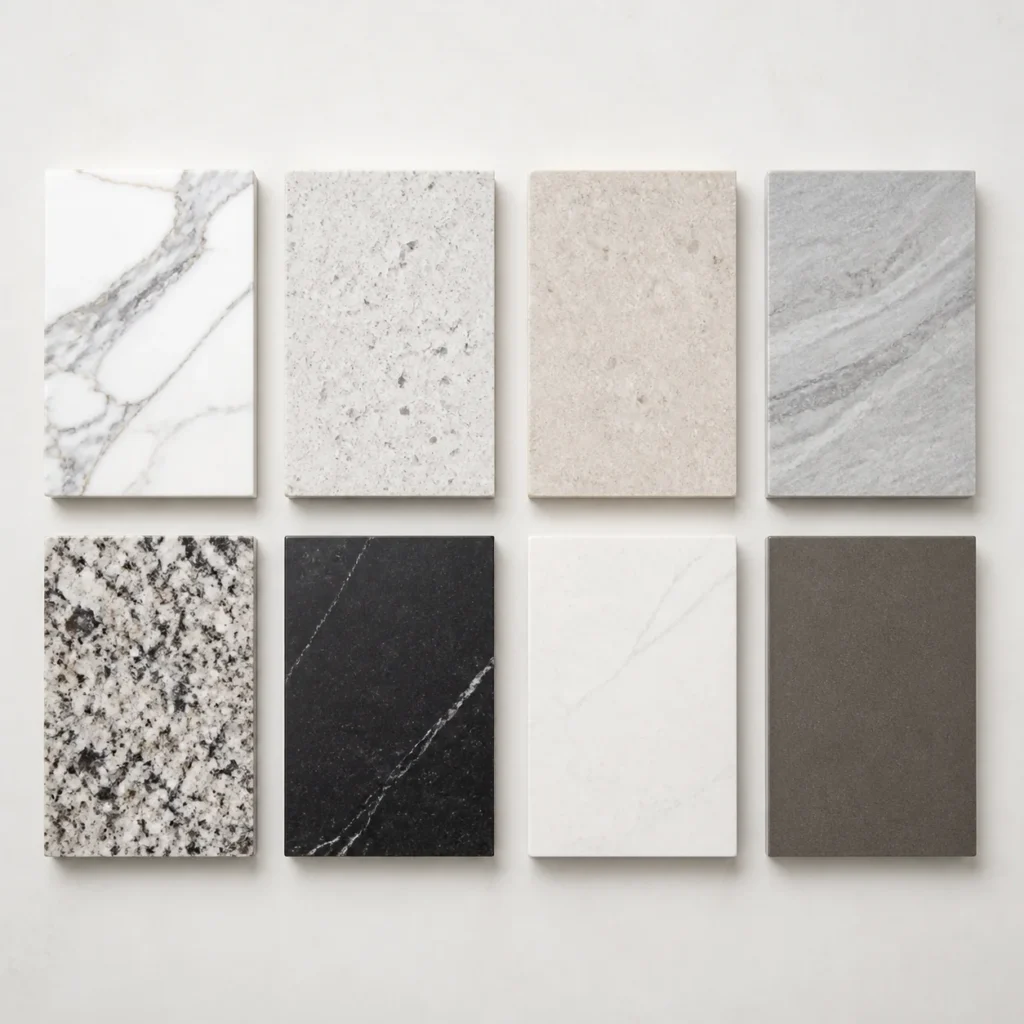
Myth 5: Stone Countertops Are Too Expensive
The luxurious look of stone often leads people to assume it’s out of reach for a typical renovation budget.
The Truth: Rare stones can be pricey, but plenty of affordable options exist. Granite alone spans a wide range of price points, and once you factor in longevity, durability, and the value it adds to your home, stone countertops often work out as a smart long-term investment rather than an indulgence. For real numbers by brand and material, our 2026 price guide to stone countertops in Malaysia breaks down what you can expect to pay.
FAQ
Do granite countertops really stain easily? Not when properly sealed — a sealed granite surface resists everyday spills like coffee, curry, or wine, and only needs resealing about once a year.
Can you put a hot pot straight from the stove onto quartz? It’s better not to. Quartz handles moderate heat but its resin content makes it less heat-tolerant than granite, so a trivet protects it from scorching or discolouration.
Is quartz better than granite for a Malaysian kitchen? Neither is universally better — quartz needs no sealing and offers more consistent colours, while granite handles direct heat better, so the right choice depends on your cooking habits and design preference.
How often do stone countertops need to be resealed? Porous stones like granite and marble typically need resealing about once a year, while quartz needs no sealing at all since it’s non-porous.
Are stone countertops worth the cost in Malaysia? Yes, for most homeowners — entry-level granite and quartz sit at accessible price points, and the durability and added home value make stone a sound long-term investment.
Conclusion
Stone countertops combine beauty, strength, and versatility, which is exactly why they remain a standout choice for Malaysian kitchens and bathrooms. Once you separate the facts from the myths, choosing a surface that suits both your budget and your cooking habits becomes a far easier decision. If you’re ready to see real slabs and real prices, visit a Sinno Stone showroom and get an honest recommendation for your space.