

Caesarstone’s proven quartz formula versus Silestone’s low-silica HybriQ+® tech, compared for Malaysian kitchens.
Caesarstone sticks with the classic engineered quartz formula that built its name; Silestone has moved to a low-silica HybriQ+® formula with recycled content. Both are premium engineered stone brands installed across Klang Valley kitchens, but they now represent two different approaches to quartz, not just two competing designs.
Key Takeaways

- Caesarstone uses up to 93% natural quartz with polymer resin. Silestone’s HybriQ+® formula cuts crystalline silica below 40% (as low as 10% on some colours) and adds a minimum of 20% recycled content, including glass.
- At entry and mid-range, Silestone runs cheaper: RM 282–484 per sqft versus Caesarstone’s RM 332–427 per sqft (supply & install, 20mm). At the very top, Caesarstone’s marble-look designs at RM 689 per sqft cost more than Silestone’s priciest colours at RM 634 per sqft.
- Both perform almost identically on heat, scratch, and stain resistance in Malaysian kitchen conditions, and both carry a 25-year limited residential warranty.
- Caesarstone leans toward marble- and granite-look designs with subtle veining; Silestone leans toward bold, uniform colours plus N-Boost surface protection.
- Neither is rated for uncovered outdoor exposure. For a fully open-air kitchen, sintered stone handles UV and heat better.
What’s the Real Difference Between Caesarstone and Silestone Now?
The biggest difference isn’t looks. It’s what’s inside the slab. Caesarstone still runs the traditional high-quartz formula; Silestone has moved to a low-silica, part-recycled composition. This is quartz-versus-quartz in name only.
Caesarstone: The Traditional Quartz Formula
Caesarstone’s composition is straightforward:
- Up to 93% natural quartz minerals, which gives it its hardness
- Polymer resins and pigments, which bind the slab and carry the colour and pattern
- A formula largely unchanged for decades
That high quartz content is why Malaysian homeowners trust it to handle daily cooking, from Raya prep to CNY reunion dinners. Selected Caesarstone lines also carry NSF-51 certification for food contact safety.
Silestone: HybriQ+® Low-Silica Formula
Silestone rebuilt its formula around HybriQ+® technology, producing a high-performance, low-silica surface:
- Minimum 20% recycled materials, including recycled glass
- Hybrid premium minerals in place of most of the high-silica content
- Crystalline silica below 40%, as low as 10% on some colours
- Lower carbon footprint, with some plants running on renewable energy
The lower silica content matters most to the people fabricating and installing the slab. It addresses wider concerns about silica exposure during cutting and polishing. For eco-conscious Malaysian buyers, HybriQ+® gets you a premium surface without the same environmental footprint.
Which Brand Suits Your Kitchen’s Look?
Caesarstone reads as classic and marble-inspired; Silestone reads as bold and uniform. Your existing cabinet style and how much pattern variation you want across a large island are the deciding factors.
Caesarstone: Marble-Look and Subtle Veining
- Marble-inspired patterns: Calacatta and Carrara looks without the upkeep of real marble
- Granite-look options: an expensive look without granite’s sealing needs
- Subtle veining, adding depth without looking busy
- Available in Polished, Honed (matte), and Concrete finishes
Malaysian homeowners tend toward Caesarstone’s white and grey marble-look colours, such as Empira White, Dreamy Carrara, and Calacatta Nuvo, and they suit both modern and more traditional cabinet styles.
Silestone: Bold, Consistent Colours
- Uniform colour across large islands, with no surprises between slabs on a big kitchen
- Bold, rich options from pure whites to dramatic blacks
- Available in Polished, Suede (matte), and Volcano (textured) finishes
Malaysian homeowners often pick Silestone’s clean whites, like Linen Cream or Blanco Zeus, which brighten tropical interiors and suit the light, airy look many prefer here.
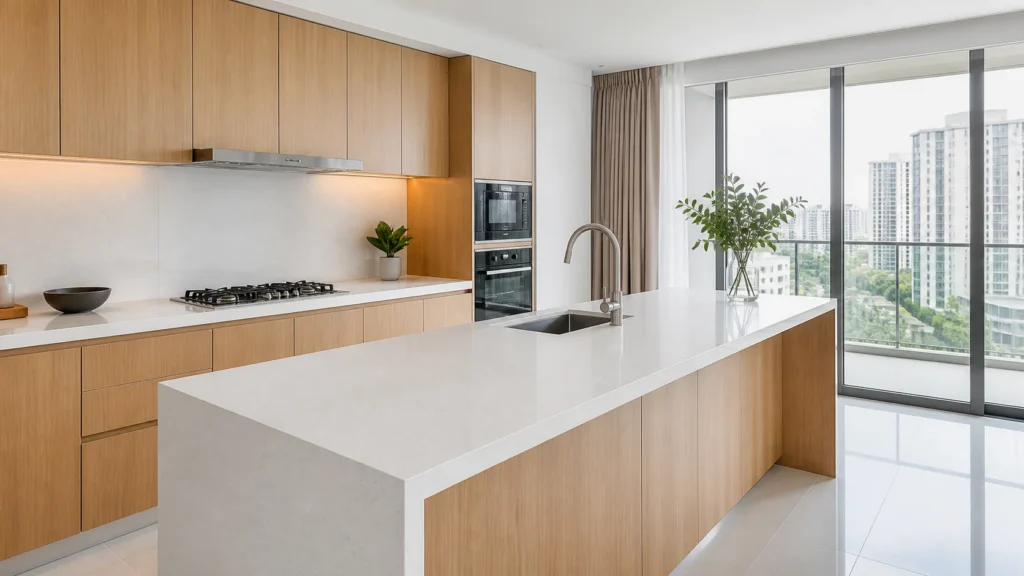
How Do They Perform in a Malaysian Kitchen?
Both hold up well against Malaysian cooking, heat, and humidity. The differences between them are narrow.
| Factor | Caesarstone | Silestone |
|---|---|---|
| Heat resistance | Good; use trivets after wok cooking or a pressure cooker | Same; N-Boost doesn’t change heat tolerance |
| Scratch resistance | Mohs hardness 7, very hard to scratch with knives | Similar hardness from its hybrid mineral formula |
| Stain resistance | Non-porous; resists turmeric, curry, kicap, coffee, wine | Non-porous, plus N-Boost’s molecular-level liquid repellency |
| Humidity | Unaffected; no mould or mildew risk | Unaffected; tested across tropical climates |
| Sealing needed | None | None |
Homeowners we’ve installed for report both surfaces staying stain-free after years of daily cooking with turmeric, dark sauces, and daun kaduk. If you’re deciding on daily upkeep, see our guide on how to clean a quartz countertop the right way, which applies to both brands.
How Much Do Caesarstone and Silestone Cost in Malaysia (2026)?
Silestone is the cheaper brand at entry and mid-range; Caesarstone costs more only at the very top, for its marble-look Supernatural-style designs. All prices below are supply & install, 20mm thickness; 30mm isn’t offered in Malaysia for either brand.
Caesarstone Pricing by Colour Tier
| Tier | Price (per sqft) | Example Colours |
|---|---|---|
| Entry | RM 332–367 | Fresh Concrete, Shitake, Frozen Terra, Georgian Bluffs, Snow, Jet Black, Oyster, Alpine Mist |
| Mid | RM 401–427 | Pure White, Frosty Carrina, Piatra Grey, Vanilla Noir, Dreamy Carrara, Woodlands |
| Premium marble-look | RM 689 | Statuario Maximus, Calacatta Nuvo, Empira White, Celestial Sky |
For a typical 30–40 sqft kitchen: entry tier runs roughly RM 9,960–14,680; mid tier RM 12,030–17,080; premium marble-look RM 20,670–27,560.
Silestone Pricing by Group
| Group | Price (per sqft) | Example Colours |
|---|---|---|
| Group 1 | RM 282 | Linen Cream, Marengo, Motion Grey |
| Group 2 | RM 318 | Persian White, Siberian, Miami White |
| Group 3 | RM 343 | Miami Vena, Desert Silver, Calacatta Tova |
| Group 4 | RM 448 | Blanco Zeus, Raw A |
| Group 5 | RM 484 | Et. Marquina |
| Group 6 | RM 571 | Et. Calacatta Gold, Ethereal Glow, Ethereal Noctis |
| Group 7 | RM 634 | Blanc Élysée, Bohemian Flame, Jardin Emerald, Parisien Bleu |
For a typical 30–40 sqft kitchen: Group 1 runs roughly RM 8,460–11,280; Group 7 runs roughly RM 19,020–25,360.
The Real Price Story
At entry to mid-range, Silestone saves you RM 50–150 per sqft over the equivalent Caesarstone tier. At the top end, Caesarstone’s marble-look designs at RM 689 cost RM 55 more per sqft than Silestone’s most expensive colours at RM 634. For a full breakdown of what drives quartz pricing across all brands, see our 2026 quartz stone price guide.
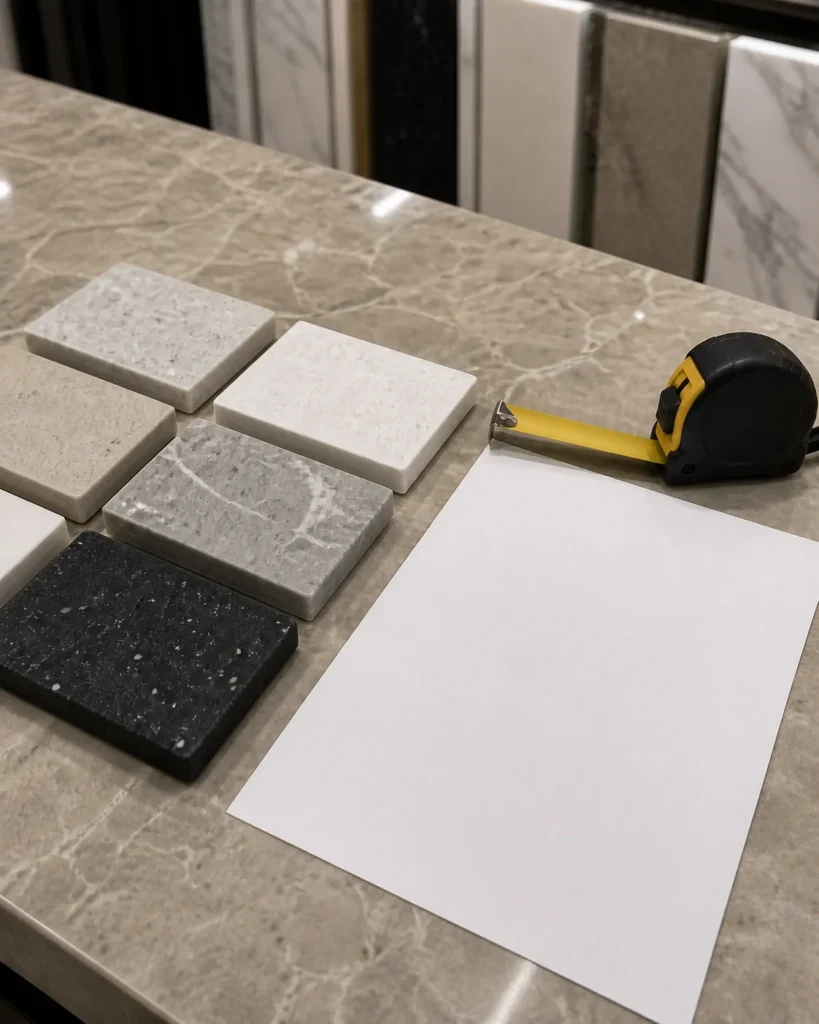
What Does the 25-Year Warranty Actually Cover?
Both brands offer the same protection on paper: a 25-year limited residential warranty covering manufacturing defects, for the original purchaser only. It doesn’t cover chips from impact, scratches from knives, or heat damage from hot cookware; that falls on daily use, not the manufacturer.
To keep a claim valid:
- Use a certified installer, since DIY or unauthorised installation can void the warranty
- Keep your invoice with the batch number recorded; without it, most suppliers won’t process a claim
- Register the warranty after installation where the brand allows it, for a smoother claims process later
Before you commit to either brand, it’s worth working through the questions to ask your countertop supplier so warranty terms don’t surprise you after the deposit’s paid.
How Do You Know You’re Getting Authentic Caesarstone or Silestone?
Check the back of the slab and match the batch number to your invoice. That’s the fastest way to confirm you’re not looking at fake quartz.
- Buy from an authorised dealer. Check the brand’s website for its Malaysian distributor list.
- Inspect the back of the slab. Genuine Caesarstone and Silestone print their brand name and a batch number label directly on the slab.
- Match the batch number to your invoice before installation day.
- Watch for red flags: uneven colour, poor edge finishing, no brand marking, or a price that seems too good to be true.
As an authorised Sinno Stone dealer, we supply both brands with full documentation and warranty backing, so there’s no guesswork on authenticity.

Do You Need Professional Installation?
Yes. Both Caesarstone and Silestone need CNC-precision fabrication, not a DIY or tiler-led install. A typical Klang Valley project runs 2–3 weeks from measurement to installation, longer around CNY or Raya when workshops close.
Before you commit to a fabricator, ask:
- How many Caesarstone or Silestone installations have you completed?
- Can I see photos of recent projects?
- What edge profiles are included in the base price?
- How are seams handled on a larger kitchen?
- What’s covered under your installation warranty, separate from the manufacturer’s?
Where Else Can You Use These Materials?
Beyond the kitchen, both materials work well as bathroom vanity tops, bar counters, and study desks, anywhere you want a non-porous, low-maintenance surface indoors.
Neither is suited to a fully exposed outdoor kitchen: prolonged direct UV and weather aren’t part of either brand’s design intent. For that kind of application, sintered stone tends to hold up better than either quartz brand. Neither should be used as a direct cutting surface or placed near open flame, such as an uncovered BBQ area.

FAQ
Are Caesarstone and Silestone readily available in Malaysia? Yes, both are sold through authorised Malaysian dealers, with lead times of roughly 2–3 weeks for Klang Valley projects. Expect longer waits around CNY and Raya, and for outstation projects.
Can I use these for an outdoor kitchen? Only in a covered outdoor area with limited direct sun. For fully exposed outdoor spaces, sintered stone or porcelain slab handles Malaysia’s UV and weather better.
Do these countertops need special cleaning in Malaysia’s humidity? No. Mild soap and water is enough for both. Neither is affected by humidity, and neither needs sealing.
Which brand handles Malaysian cooking better: turmeric, sambal, curry? Both handle it equally well. Silestone’s N-Boost gives it slightly better liquid repellency, but neither stains from daily Malaysian cooking.
Is the price difference between the two brands significant? It depends on the tier. Silestone is cheaper at entry to mid-range (RM 282–484 vs RM 332–427 per sqft); Caesarstone costs more only at the top, where its marble-look designs sit at RM 689 versus Silestone’s RM 634 per sqft.
How long will either countertop last in Malaysian conditions? With normal care, 20–30+ years. Most homeowners replace theirs for a style change, not because the material has failed.
Caesarstone or Silestone: Which Should You Choose?
Choose Caesarstone if you want decades-proven quartz performance, prefer marble- or granite-look designs with subtle veining, and are working with a classic or transitional interior.
Choose Silestone if sustainability matters to you, you prefer bold and uniform colours across a large island, and you want N-Boost’s extra surface protection at a more accessible entry price.
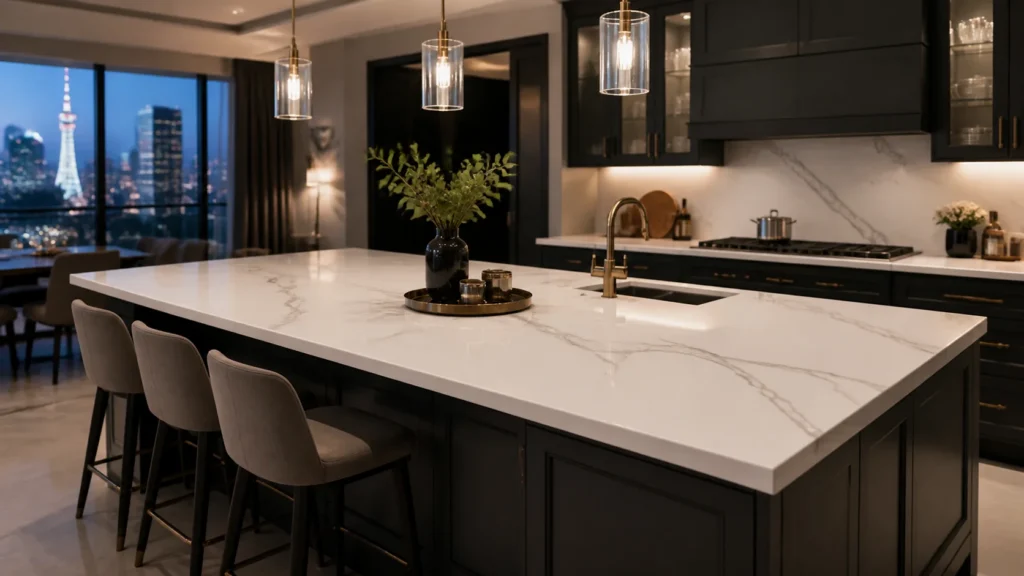
Neither is the wrong choice. Both are premium engineered stone that will handle a Malaysian kitchen for decades. The deciding factor comes down to what you value more: Caesarstone’s proven tradition, or Silestone’s sustainable innovation. If you’re still weighing the wider field of options, our complete guide to choosing the right kitchen countertop covers how these two fit against other materials.
Bring us your cabinet colours and lighting, and we’ll help you compare both brands in person. No showroom pressure, just an honest read on which one suits your kitchen.