

Calacatta vs Carrara marble compared, plus quartz and sintered stone alternatives for Malaysian homes.
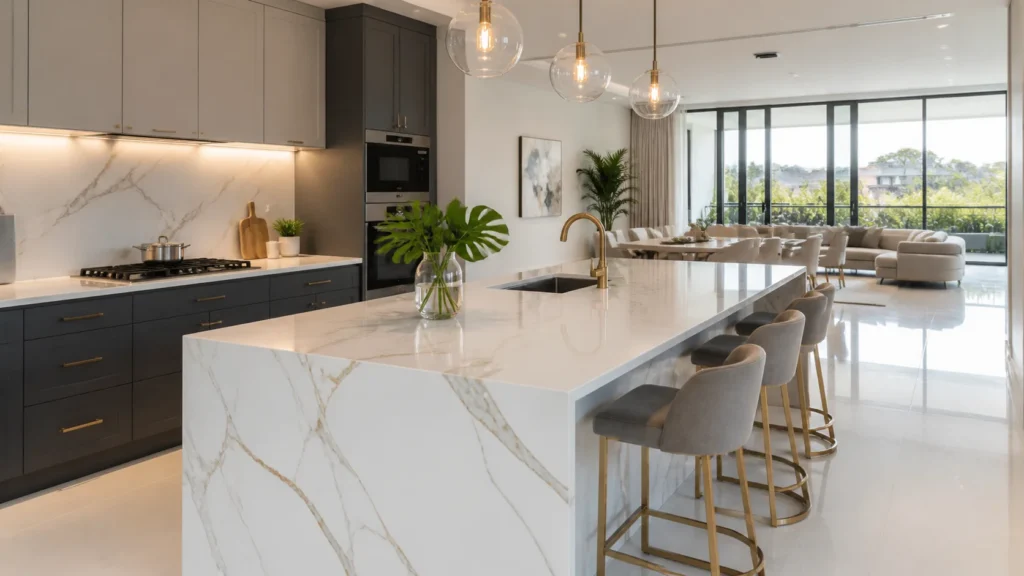
Calacatta marble has bold, dramatic gold-grey veining on a bright white base, while Carrara marble shows finer, feathery grey veining on a cooler, softer white. Calacatta is rarer and costs more; Carrara is more widely available and has been the classic choice for centuries. Both are stunning, and both are porous natural stones that need real care in a Malaysian home.
Key Takeaways
- Calacatta has bold, high-contrast veining on a brighter white background; Carrara has softer, more linear grey veining on a cooler white.
- Calacatta costs significantly more than Carrara because of its rarity and the way each slab is cut from the quarry.
- Both are porous natural stones that need sealing with an impregnator and careful handling around acidic Malaysian ingredients like lime juice, vinegar, and turmeric.
- Quartz and sintered stone versions of Calacatta and Carrara start from around RM110 per sqft (supply and install) and don’t need sealing at all.
- Given daily exposure to hot woks, sambal, and turmeric, most Malaysian homeowners now reserve natural marble for vanities, feature walls, or dry kitchen islands, and use an engineered alternative on the wet kitchen countertop.
What’s the Real Difference Between Calacatta and Carrara Marble?
Calacatta and Carrara are both quarried in the same region of Tuscany, Italy, but they come from different quarries, which is why their veining and colour turn out so differently. Calacatta reads as bolder and more luxurious; Carrara reads as softer and more classic.
Where Are Calacatta and Carrara Quarried?
Both stones trace back to the marble quarries around Carrara, in the Apuan Alps of Tuscany — a region that has supplied marble for sculpture and architecture since Roman times. Calacatta comes from a smaller number of quarries and is extracted in far lower volumes, which is the main reason it’s rarer and pricier than Carrara. Carrara has been quarried at much larger scale for centuries and remains one of the most recognisable marbles in the world.
How Do Calacatta and Carrara Look Different?
Side by side, the two are easy to tell apart once you know what to look for.
| Feature | Calacatta White Marble | Carrara White Marble |
|---|---|---|
| Background | Bright, crisp white | Softer white with a bluish-grey undertone |
| Veining | Bold, dramatic veins in grey, gold, or beige | Fine, feathery, more linear grey veins |
| Overall style | High contrast, statement-making | Subtle, classic, understated |
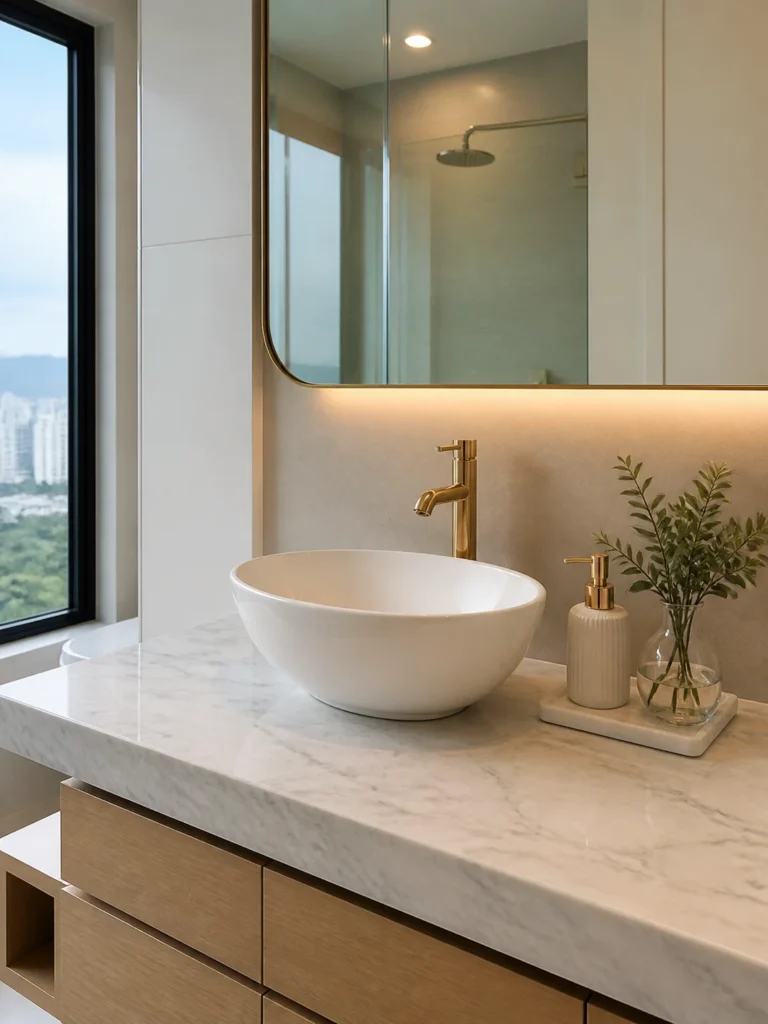
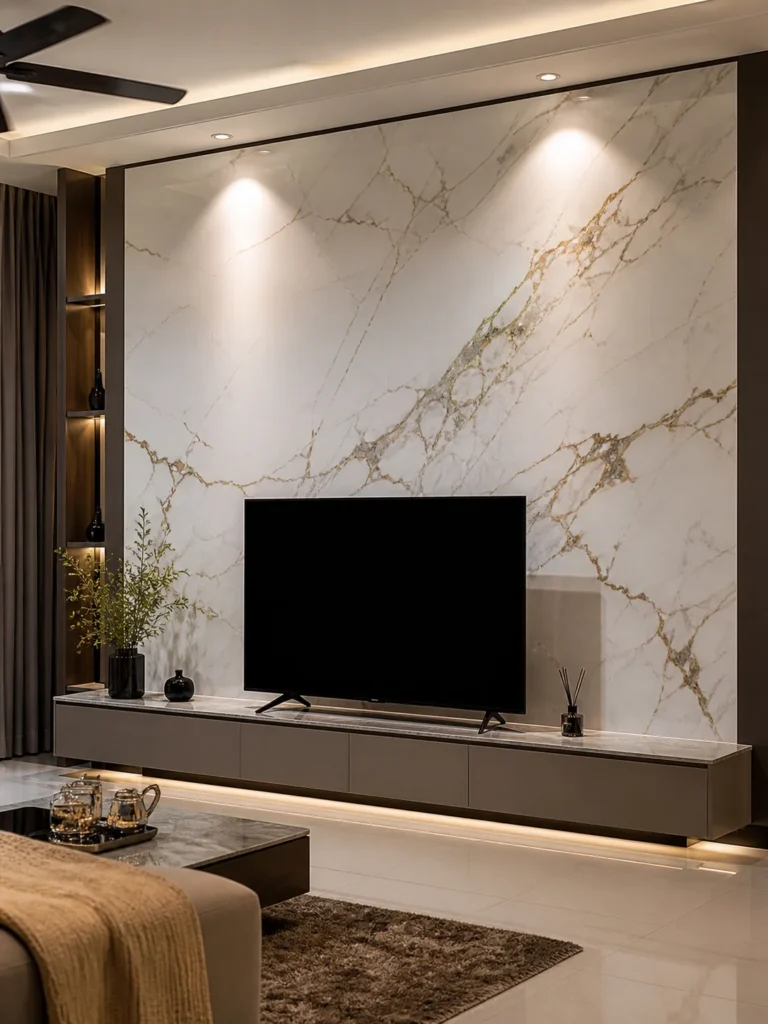
| Best suited for | Feature walls, luxury vanities, statement islands | Flooring, backsplashes, classic bathrooms |
If you want a countertop or wall that draws the eye the moment someone walks in, Calacatta’s contrast does that job. If you want a surface that reads as timeless without competing for attention, Carrara’s quieter veining fits that brief better.
How Much More Expensive Is Calacatta Than Carrara?
Calacatta consistently costs more than Carrara, and the gap comes down to supply. Calacatta is quarried in smaller quantities from fewer sites, so demand regularly outstrips what’s available. Carrara is quarried at much greater volume and has decades of established supply chains behind it, which keeps it more accessible for both residential and commercial projects.
For a full breakdown of what natural marble actually costs installed in a Malaysian home — and how that compares to quartz — see our guide on marble vs quartz for Malaysian kitchens.
Which Is More Durable and Easier to Maintain?
Neither stone has an advantage here — Calacatta and Carrara are both natural, porous marble, so they share the same maintenance demands.
- Sealing. Both need an impregnator sealer to slow down staining, reapplied every few years depending on use. If you’re not sure what an impregnator actually does or whether your surface needs one, our guide on what an impregnator is and when to use one covers it in plain terms.
- Etching. Marble is calcium carbonate, which reacts with acid. Lime juice from sambal, vinegar from achar, or a splash of soy sauce left too long can leave a dull, permanent mark — that’s a chemical reaction, not a cleaning failure, and no amount of scrubbing reverses it.
- Humidity. Malaysia’s 70–90% humidity gives porous stone more opportunity to absorb moisture over time, which is one more reason sealing schedules matter here more than in a drier climate.
- Scratching. Both sit at roughly the same hardness on the Mohs scale, so knives and abrasive scouring pads mark them at a similar rate.
This is exactly why most Malaysian homeowners who love the Calacatta or Carrara look reach for an engineered alternative in the wet kitchen, and save the real stone for lower-contact areas.

What Do Quartz and Sintered Stone Alternatives Look Like?
Quartz and sintered stone collections now replicate Calacatta and Carrara’s veining closely enough that most homeowners can’t tell the difference from a metre away — and you get a non-porous, stain-resistant surface that never needs sealing. Here’s what’s available across Sinno’s brand range, with real supply-and-install pricing per square foot.
| Brand | Material | Collection | Finish | Price (Supply & Install, per sqft) |
|---|---|---|---|---|
| Moca Compact | Sintered Stone | Calacatta Borghini, Haven, Royal, Luxe, White | Gloss/Matte, 12mm | RM 110 |
| Zenstone | Quartz Stone | Calacatta Paris | Polished, 15mm | RM 155 |
| Zenstone | Quartz Stone | Carrara White | Polished, 15mm | RM 155 |
| Zenstone | Quartz Stone | Calacatta Gold, Storm, White | Polished, 20mm | RM 160 |
| Moonstone | Quartz Stone | Calacatta Breeze | Leather, 20mm | RM 226 |
| Caesarstone | Quartz Stone | Dreamy Carrara | Honed | RM 427 |
| Silestone | Quartz Stone | Calacatta Themis, Calacatta Tova | Polished | RM 343 |
| Silestone | Quartz Stone | Et. Calacatta Gold | Polished | RM 571 |
| Caesarstone | Quartz Stone | Calacatta Nuvo, Calacatta Stillstorm | Polished | RM 689 |
Moca Compact’s sintered stone options are the most budget-friendly route to the Calacatta look, and sintered stone also handles heat and scratching better than either natural marble or quartz. Zenstone offers the most affordable quartz route into both the Calacatta and Carrara look. At the top end, Caesarstone and Silestone’s premium collections give you the boldest, most photorealistic veining, closest to a genuine high-grade Calacatta slab.
If you’d like the full brand-by-brand pricing picture beyond these two colourways, our 2026 quartz stone price guide breaks down every collection.
Where Should You Use Calacatta, Carrara, or an Engineered Alternative?
The right choice depends on which surface you’re covering and how much daily wear-and-tear it takes.
| Material | Best For |
|---|---|
| Natural Calacatta | Feature walls, luxury vanities, statement islands with light use |
| Natural Carrara | Flooring, backsplashes, classic bathroom vanities |
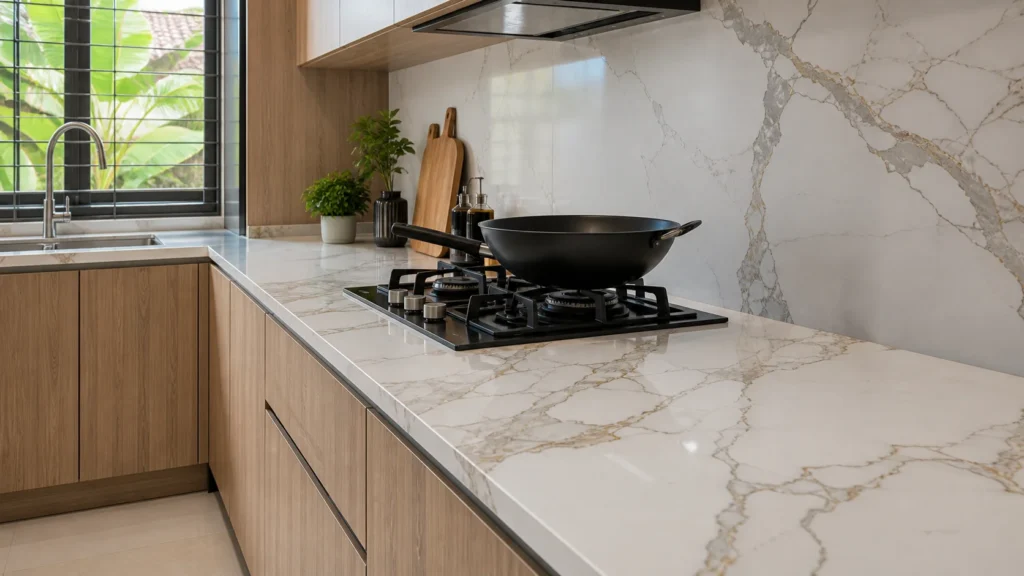
| Quartz (Calacatta/Carrara-look) | Wet kitchen countertops, family kitchens, high-traffic islands |
| Sintered stone (Calacatta-look) | Kitchen countertops, outdoor kitchens, feature walls exposed to heat and sun |
A common approach we see in Malaysian renovations: natural Carrara or Calacatta on a dry kitchen island or bathroom vanity for the authentic look, paired with a Calacatta-look quartz or sintered stone on the wet kitchen countertop that actually cooks the meals. For more on how that dry-kitchen pairing works in practice, see our guide on compressed marble countertops, a related budget-conscious alternative worth understanding before you commit to real marble anywhere in the home.
FAQ
Which is more expensive, Calacatta or Carrara marble? Calacatta costs significantly more than Carrara because it’s quarried in smaller volumes from fewer sites, while Carrara has been supplied at scale for centuries.
Can I use Calacatta or Carrara marble in a Malaysian kitchen? Yes, but only with a proper sealing routine and care around acidic ingredients — both stones etch when lime juice, vinegar, or turmeric sits on the surface, so many homeowners restrict real marble to vanities, feature walls, or dry kitchen islands instead.
Do quartz and sintered stone really look like Calacatta or Carrara marble? Yes. Premium collections like Caesarstone’s Calacatta Nuvo and Silestone’s Calacatta Themis replicate the veining closely enough that most people can’t tell it apart from natural marble at normal viewing distance.
How do I tell Calacatta and Carrara apart just by looking? Check the veining and the undertone: Calacatta has bold, high-contrast veins on a bright white base, while Carrara has finer, more linear grey veins on a cooler, slightly bluish-white base.
Does Calacatta or Carrara marble need to be sealed? Yes, both need regular sealing with an impregnator, since they’re porous natural stone that absorbs liquids and reacts to acid without that protective layer.
Conclusion
Choosing between Calacatta and Carrara comes down to how bold you want the veining and how much you’re willing to spend for it: Calacatta for a dramatic, high-contrast statement, Carrara for a quieter, classic look. But for any surface that faces daily cooking, turmeric, and hot woks, an engineered alternative in the same colourway gets you the aesthetic without the sealing routine. Browse Sinno’s Calacatta and Carrara-inspired quartz and sintered stone collections, or visit our showroom to see the veining in person before you decide.