

A ceramic kitchen sink is easy to clean, resists stains and heat, and looks beautiful, but it can chip, it is heavy, and it asks for more care than stainless steel. Whether it suits you depends on how you cook and how your countertop is built around it.
Scrolling through farmhouse kitchens on Pinterest and wondering if that white sink would survive your wok? This guide goes through the honest pros and cons, and what your stone countertop needs if you go ceramic.

Key Takeaways
- Ceramic sinks resist stains, heat and scratches, and wipe clean easily thanks to their glazed surface.
- Their main weaknesses are chipping from heavy pots, their weight, and a higher price than basic stainless steel.
- Fireclay is the tougher type of ceramic sink, because the glaze and clay fuse into one dense body.
- A ceramic sink needs a strengthened cabinet and should be set in place before the stone countertop goes on.
- Your countertop cutout should leave at least 50mm of stone around the sink to reduce crack risk.
What Is a Ceramic Kitchen Sink?
A ceramic kitchen sink is made from clay that is shaped, glazed and fired in a kiln until it hardens into a smooth, non-porous surface. The glaze gives it that glossy finish you see in showrooms.
There are two main types you will come across in Malaysia:
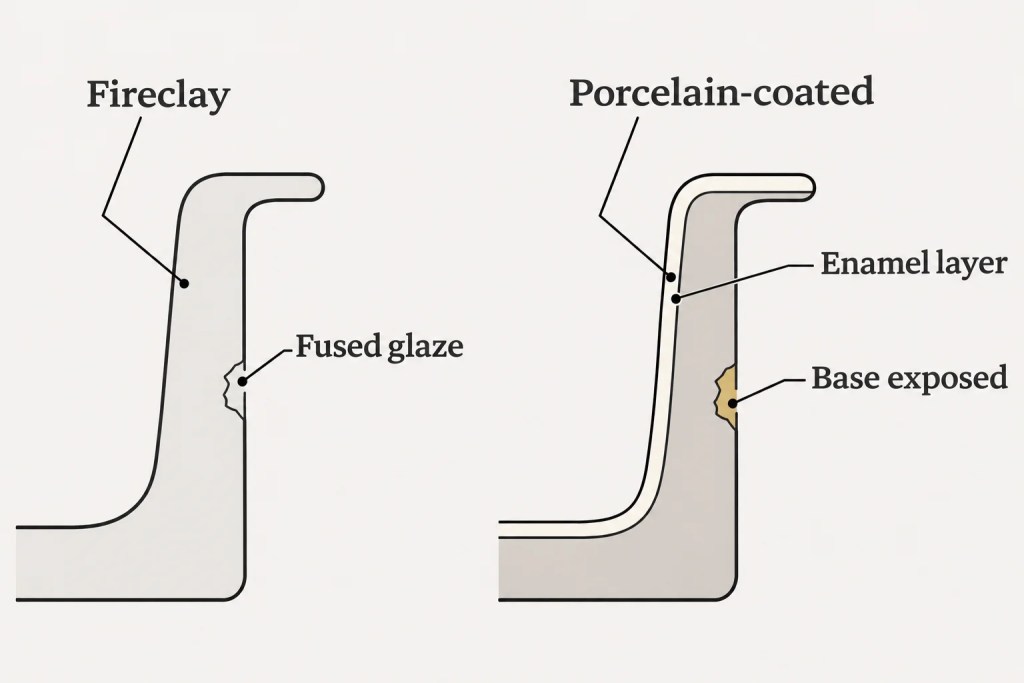
- Fireclay is fired at a much higher temperature, so the glaze and clay fuse into one solid body. It is denser and tougher, and it is what most farmhouse or apron-front sinks are made of.
- Porcelain-coated sinks have a base (often cast iron or a different ceramic) coated with a porcelain enamel layer. If the coating chips, the material underneath shows through.
When shops say “ceramic sink”, they can mean either, so ask which one you are getting.
What Are the Pros of a Ceramic Kitchen Sink?
The biggest advantages are the easy-clean glaze and the look. Here is the full list.
Easy to Clean
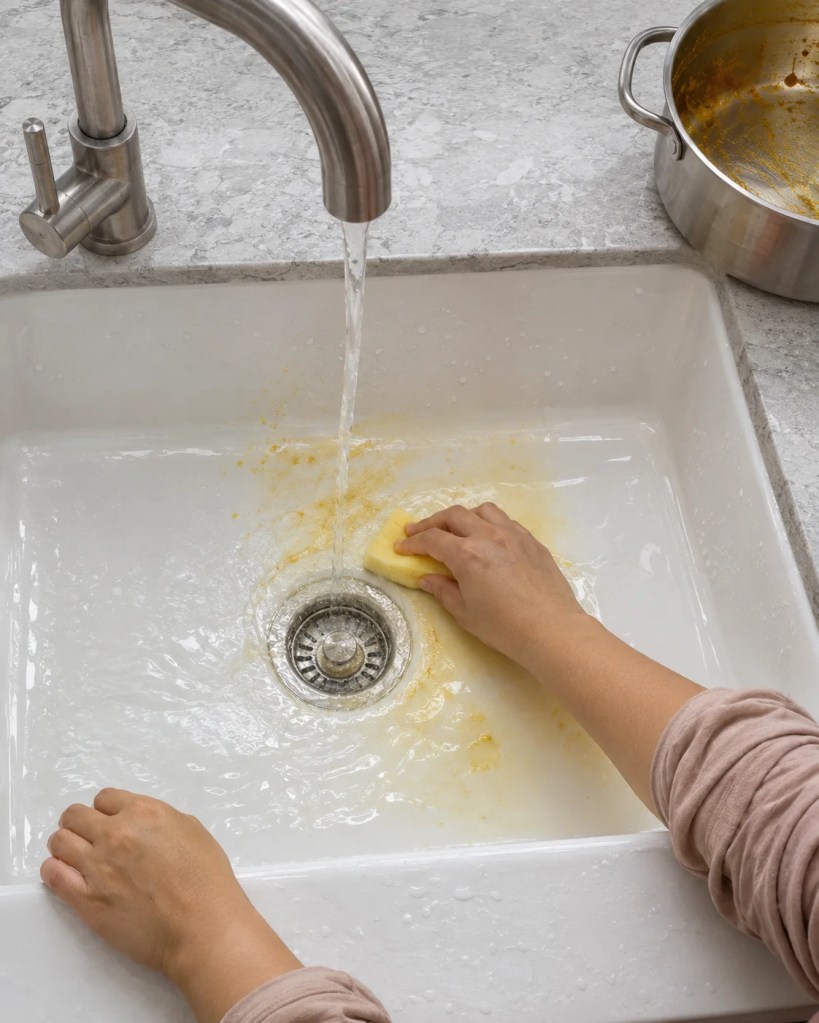
The glazed surface is non-porous, so grease, rice starch and curry stains wipe away with dish soap and a soft sponge. There are no water spots to polish off like on stainless steel.
Resists Stains and Odours
Because nothing soaks into the glaze, turmeric, coffee and soy sauce do not leave permanent marks when you rinse them off reasonably soon. Bacteria and smells also have nowhere to hide.
Handles Heat Well
Ceramic is fired at extreme temperatures, so pouring boiling water or draining hot noodles into it will not hurt the sink. That said, very sudden temperature changes on older or thinner sinks are still worth avoiding.
Scratch Resistant
A good fireclay sink shrugs off daily cutlery and plates better than stainless steel, which scratches easily and shows every mark.
A Look Stainless Steel Cannot Match
White, off-white, black or matte grey, a ceramic sink turns a plain kitchen into something that looks designed. It pairs especially well with warm wood cabinets or a marble-look quartz top.
Quiet
Ceramic is solid and heavy, so running water and dropped spoons do not clang the way they do on thin steel.
What Are the Cons of a Ceramic Kitchen Sink?
The main drawbacks are chipping, weight and price. If heavy woks and pots often go into your sink, the first one matters most.
It Can Chip or Crack
Drop a cast-iron wok or a heavy cleaver into a ceramic sink and it may chip. Fireclay is more forgiving than porcelain-coated sinks, but no ceramic sink is chip-proof. If you often bang heavy pots around in the sink, stainless steel is kinder to your nerves.

Harder on Your Dishes
Stainless steel gives a little when a glass slips from your hand. Ceramic does not, so the glass usually loses. A sink grid at the bottom helps a lot.
It Is Heavy
A large ceramic sink weighs far more than a steel one. Your cabinet needs to be strong enough to carry it, and installation takes more planning (more on that below).
Costs More
Expect to pay more than a standard stainless steel sink, and more again for a big fireclay farmhouse model. Replacement is also a bigger job if it ever cracks.
Chips Are Hard to Repair
Small chips can be patched with repair kits, but the fix is rarely invisible, especially on white glaze.
Not All Cleaners Are Safe
Abrasive powders and steel wool can dull the glaze over time. Stick to soft sponges and mild cleaners.
Ceramic vs Stainless Steel: Which Suits a Malaysian Kitchen?
Stainless steel suits homes where heavy woks, claypots and cast-iron pans get dropped or knocked around the sink every day, and ceramic suits homes that want a statement sink and handle their cookware gently.
| Feature | Ceramic / Fireclay | Stainless Steel |
|---|---|---|
| Look | Glossy, classic, many colours | Modern, industrial |
| Stain resistance | Excellent | Good, but shows water spots |
| Scratch resistance | Good | Scratches easily |
| Chip / dent risk | Can chip from heavy impact | Can dent, but will not chip |
| Noise | Quiet | Noisy unless insulated |
| Weight | Heavy | Light |
| Kind to dropped dishes | No | Yes |
| Price | Higher | Lower to mid |
Only have one sink? Go with stainless steel if heavy pots land in the sink most days or several people in the house wash up in a hurry. Choose fireclay if you are happy to set pots down rather than drop them, and fit a bottom grid from day one.
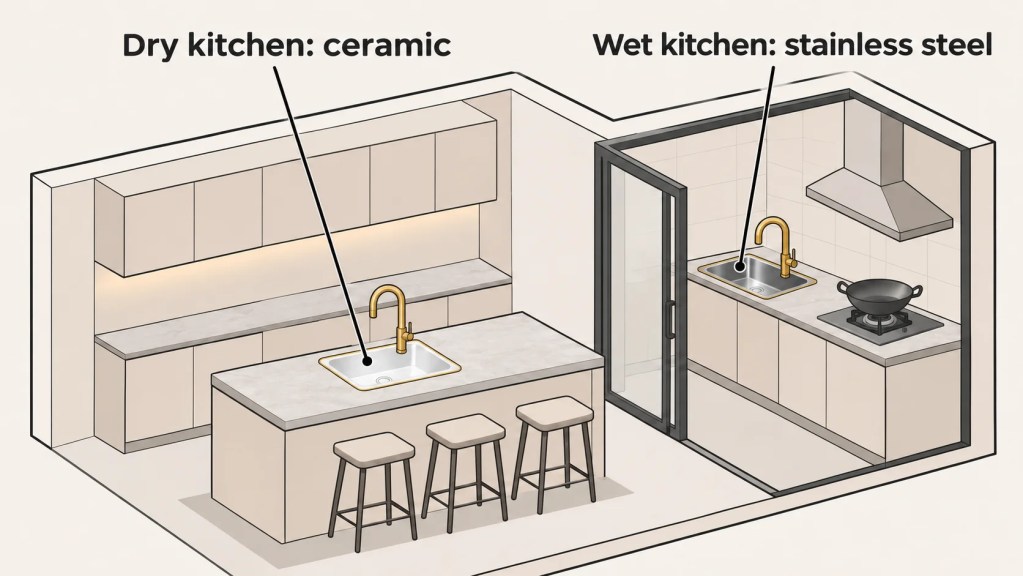
If your home has both, a dry and wet kitchen split is another option: a ceramic sink in the dry kitchen for show and light prep, and a stainless steel sink in the wet kitchen where the heavy woks and pots get washed.
What Does a Ceramic Sink Mean for Your Stone Countertop?
A ceramic sink affects how the countertop is planned, fabricated and installed, so tell your countertop fabricator early.
Decide Undermount or Top-Mount First
Fireclay and other heavy sinks suit undermount installation under a stone slab, which gives a seamless edge that is easy to wipe crumbs into. Top-mount ceramic sinks sit on the counter with a visible rim. If you are unsure which to choose, our guide to undermount vs top-mount kitchen sinks compares the two.
Strengthen the Cabinet and Set the Sink First
Because ceramic sinks are heavy, the base cabinet should be reinforced to carry the sink, the water and whatever you pile into it. The sink is usually set in place before the countertop is installed, so your carpenter, plumber and countertop team need to agree on the order.
Give Your Fabricator the Exact Sink
Ceramic sinks are handmade in a kiln, so sizes can vary slightly from the catalogue. Have the actual sink (or its template) on site before the countertop is measured and cut. A cutout based on a brochure drawing is how you end up with a gap.

Leave Enough Stone Around the Cutout
Keep at least 50mm of stone between the sink cutout and the front edge or backsplash. Narrow strips of stone are weak points, and this matters even more with a wide sink on sintered stone, which is more brittle at thin edges than quartz.
Match the Look
A white fireclay sink looks sharp against a dark granite or grey quartz top, while a black ceramic sink pairs well with light, marble-look surfaces. Not sure which countertop material to build around it? Our guide to kitchen countertop materials in Malaysia compares 14 options.
How Do You Care for a Ceramic Kitchen Sink?
Daily care is simple: rinse, wipe with dish soap, and dry if you want it to stay spotless.
- Use a soft sponge, never steel wool or scouring powder.
- Put a stainless steel grid at the bottom to cushion the glaze from everyday knocks, and still lower heavy pots in gently.
- Rinse turmeric, curry and coffee off quickly instead of leaving them overnight.
- For stubborn marks, use a baking soda paste and rinse well.
- Do not use drain cleaners with harsh chemicals that can sit on the glaze.
The countertop around it deserves the same gentle treatment. See how to clean a quartz countertop the right way for the basics.
FAQ
Do ceramic kitchen sinks chip easily? Ceramic sinks can chip when a heavy pot or wok is dropped into them, but fireclay sinks are dense and resist everyday knocks well. A bottom grid and setting pots down gently reduce the risk, though no grid makes a ceramic sink chip-proof.
What is the difference between fireclay and ceramic sinks? Fireclay is a type of ceramic that is fired at a higher temperature, which fuses the glaze and clay into one tougher body. Standard porcelain-coated sinks have a thinner enamel layer that shows the base material when chipped.
Is a ceramic sink better than stainless steel? A ceramic sink is better for looks, stain resistance and quiet use, while stainless steel is better if heavy woks and pots often get dropped or knocked in the sink, and for a lower budget. Homes with a dry and wet kitchen can use one of each.
Can you install a ceramic sink under a quartz or granite countertop? Yes, ceramic and fireclay sinks can be undermounted under quartz or granite. The cabinet needs to be strengthened, and the sink should be in place before the countertop is fitted.
Do ceramic sinks stain? A glazed ceramic sink resists staining because the surface is non-porous. Strong colours like turmeric can leave a mark if left for long, but they usually wipe off with mild soap or a baking soda paste.
Conclusion
A ceramic kitchen sink gives you a glossy, easy-clean surface that looks great for years, as long as you accept the weight, the price and the need to go gently with heavy pots. If heavy woks and pots often land hard in your sink, stainless steel is the safer single choice. If you have both a dry and wet kitchen, you can keep stainless steel in the wet kitchen and let ceramic shine in the dry one.
Whichever sink you choose, the countertop around it needs a precise cutout and enough stone to stay strong. If you are planning a new kitchen top in the Klang Valley, send us your sink model and we can help plan the cutout before anything is cut.