

Why quartz works well for laundry room countertops in Malaysian homes, and how to design one properly.
Yes, quartz stone is one of the most practical countertop choices for a Malaysian laundry room. It resists detergent, bleach, and hair dye stains without sealing, and it holds up to daily washing, folding, and storage. Below, we break down why it works, where to be careful, and how to design it so the space stays durable, easy to clean, and good value.

Key Takeaways
- Quartz is non-porous, so detergent, softener, bleach, and hair dye don’t soak into the surface — a quick wipe is usually enough.
- It needs no sealing and only mild soap and water for daily care.
- Avoid resting a hot iron directly on it, and wipe up undiluted bleach or harsh solvents promptly.
- 20mm is the standard thickness for most brands and colours; 30mm suits a chunkier look with proper support.
- Supply & install pricing runs from roughly RM110/sqft (entry-level Zenstone) to RM689/sqft (premium Caesarstone marble-look collections).
Why Do Homeowners Choose Quartz for Laundry Rooms?
Homeowners choose quartz for laundry rooms because it survives daily contact with detergent, water, and stacked baskets without staining or wearing down. Five properties make it a strong fit:
- Non-porous surface. Spills from detergent, softener, bleach, and even hair dye won’t soak in easily. A quick wipe usually settles it.
- Stain resistance. A quartz laundry countertop handles everyday stains better than many natural stones because there are no natural pores for liquid to seep into.
- Low maintenance. No sealing needed, ever. Daily care is just mild soap and water.
- Consistent look. Colour and pattern are uniform, so joins look neat — useful if your laundry connects to the kitchen or a pantry.
- Strong and durable. Engineered quartz has high hardness and resists scratches from baskets, hangers, and light tool knocks.
Where Should You Be Mindful With Quartz in a Laundry Room?
Quartz has three real limits in a laundry setting: heat, strong undiluted chemicals, and prolonged direct sun. None of them rule quartz out — they just need a bit of planning.
Heat exposure. Most laundry rooms don’t have direct high heat like a kitchen hob, so this is less of a concern than in a kitchen. Still, avoid placing a hot iron directly on the top — use a trivet or ironing mat, the same caution we cover in what are the disadvantages of quartz stone countertops.
Strong chemicals left to sit. Undiluted bleach or harsh solvents left for long periods can affect the resin binder in quartz. Wipe spills promptly rather than letting them dry.
UV exposure. Direct, strong sunlight over many years can cause slight colour shifts in some quartz colours. If your laundry has large windows with hot afternoon sun, consider UV blinds or window tint.
How Does Quartz Handle Real Laundry Messes?
Quartz handles most laundry-specific messes well as long as spills are wiped up rather than left to dry overnight. Here’s how it holds up against the messes a laundry room actually sees:
- Detergent and softener. Usually no issue. Wipe with a damp cloth once it dries.
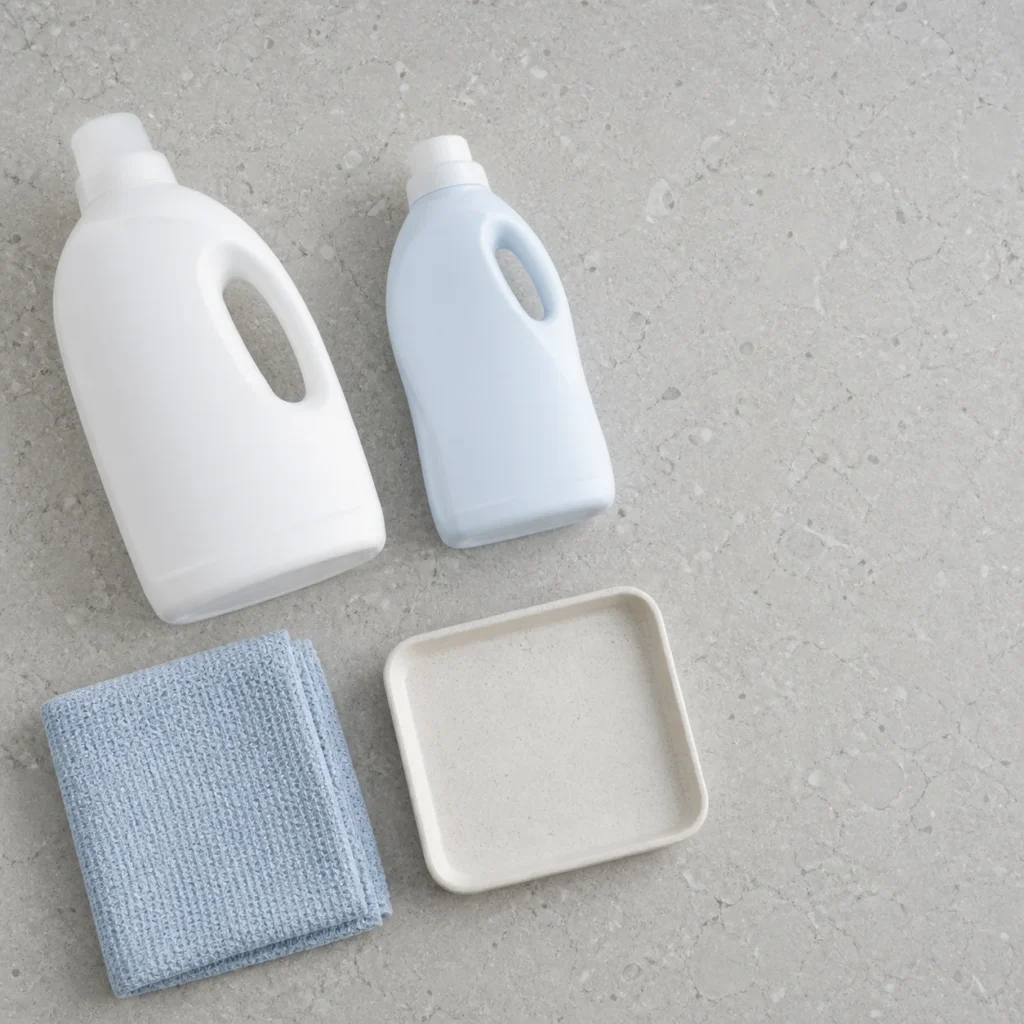
- Bleach splashes. Wipe off quickly. For peace of mind, keep a small bleach-safe tray under your bottles.
- Hair dye or coloured liquids. Quartz is non-porous, but darker dyes can mark the surface if left to dry. Clean up promptly.
- Rust or metal marks from baskets. Use silicone feet or felt pads on storage bins to avoid scuff lines building up over time.

How Do You Design a Functional Quartz Laundry Countertop?
A functional quartz laundry countertop comes down to getting thickness, sink choice, backsplash, and support right before fabrication — not after.
Size and Thickness
20mm is the standard stock thickness for most brands and colours in Malaysia, as covered in why stone thickness doesn’t matter much in Malaysian kitchens — the same logic applies to a laundry top. Keep the overhang modest to reduce flexing if you lean on the edge, and if the countertop sits over a washer and dryer, make sure there’s proper ventilation and access to service panels.
Sink Integration
An under-mount sink gives a clean, modern look and wipes in easily — ask your fabricator to polish and seal the cut-out edges. If you hand-wash or soak items often, choose a deep single bowl. Our guide on undermount vs top-mount kitchen sinks covers the same trade-offs that apply here.
Backsplash
Continuing quartz up the wall 75–100mm gives a short upstand that’s low-maintenance, or you can go full-height behind the sink for a sleeker finish. Either option helps with tap splashes and cuts down on grout cleaning.
Edge Profiles
Simple profiles like a mitre edge are practical for a utility space. Fancier edges look nice but aren’t necessary here.
Storage and Support
If the top spans over appliances, use a proper carcass or steel support so the slab has continuous bearing along its length. Plan for detergent pull-out drawers and a small stain-treatment corner tray while you’re at it.
Light Colours vs Dark Colours
Light colours make a small laundry feel bigger and show dust less. Dark colours hide the odd scuff better but can show detergent residue if not wiped down.

What Finishes Work Best for Laundry Spaces?
Polished finish works best for most laundry spaces because it’s the easiest to wipe clean, though matte and speckled options each solve a specific problem.
- Polished. Glossy, bright, and the most common choice. Easy to wipe.
- Matte/honed. Modern and less reflective, but needs slightly more frequent cleaning since smudges show more easily.
- Light speckle or fine veining. Good at hiding water marks and lint while keeping a premium look.
What Should You Check Before Installation?
Before installing a quartz laundry countertop, confirm your measurements, power points, waterproofing, and wall flatness — problems in any of these show up as visible gaps or rework later.
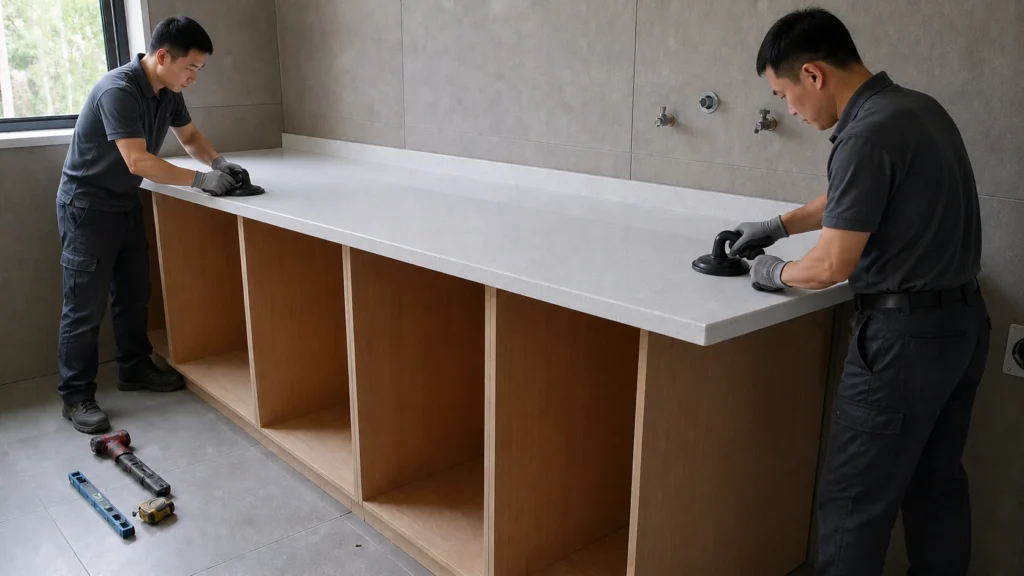
- Measurements. Get a site measure after your cabinet carcasses are fixed in place — don’t order from drawings alone, since walls can be out of square. This is the same sequencing issue we cover in do you need to install cabinets before ordering a stone countertop.
- Power point placement. Plan sockets above counter height and away from splash zones.
- Waterproofing and drainage. Confirm there’s proper waterproofing near the sink and any washing machine inlet or outlet.
- Wall flatness. Uneven walls mean thicker silicone lines — ask your contractor to skim the wall where needed.
- Delivery and access. Quartz slabs are heavy. Check stairs, lifts, and door widths before delivery day.
How Much Does a Quartz Laundry Countertop Cost in Malaysia?
A quartz laundry countertop typically costs less in total than a kitchen countertop simply because the area is smaller, but the per-square-foot rate depends on the brand you choose. For a full brand-by-brand breakdown, see our 2026 quartz stone price guide.
| Brand | Price Range (RM/sqft, Supply & Install) |
|---|---|
| Zenstone | RM110–160 |
| Moonstone | RM182–226 |
| Silestone | RM282–634 |
| Caesarstone | RM332–689 |
A typical laundry countertop runs a few square feet, so even premium brands stay affordable in absolute terms compared to a full kitchen. Cut-outs for the sink, edge polishing, and splashback pieces add to the fabrication cost on top of the per-sqft rate — confirm these line items when you get your quote.
Tip: if your kitchen already uses quartz, ordering the laundry top at the same time often saves on delivery and makes colour matching easier.
What Are the Alternatives to Quartz for a Laundry Countertop?
Quartz isn’t the only option for a laundry countertop — laminate, solid surface, granite, and sintered stone or porcelain each trade off differently on cost, water resistance, and maintenance.
- High-pressure laminate. Budget-friendly with many colour options, but not as water- or heat-resistant. Edges and joins can swell if water seeps in.
- Solid surface. A seamless look that’s repairable if scratched, though more sensitive to heat and chemicals than quartz — see is solid surface still a good choice for the full picture.
- Granite. Natural beauty and good heat resistance, but needs sealing and more care around detergents and dyes.
- Sintered stone or porcelain. Highly heat- and UV-resistant, though fabrication tends to cost more and edges can chip if mishandled.
If low maintenance and a clean look are your priority, quartz remains the strongest middle ground of the four.
FAQ
Is quartz OK with bleach? Light splashes are fine if wiped quickly, but avoid letting undiluted bleach sit on the surface for extended periods.
Can I put a hot iron on a quartz countertop? Better not — use a heat-proof mat or an ironing board instead, since direct, sustained heat can damage the resin in the surface.
Will quartz change colour in the sun? Strong, long-term UV exposure can affect some quartz colours. If your laundry room gets harsh afternoon sun, consider blinds or window tint.
Do I need to seal a quartz laundry countertop? No. Quartz is non-porous by design and doesn’t need sealing, unlike granite or marble.
What thickness should I choose for a laundry countertop? 20mm is the common, cost-effective choice. Choose 30mm for a chunkier look or where extra rigidity is preferred, with proper support underneath.
Verdict: Is Quartz Suitable for a Laundry Room Countertop?
Yes. For most Malaysian homes, quartz balances durability, easy cleaning, and modern looks in a laundry room better than the alternatives. Keep harsh chemicals from sitting too long, avoid direct heat contact, and it will serve you well for years.
Ready to plan your quartz laundry countertop? We can help you choose colours, confirm measurements, and quote based on your layout — contact us here.