

Why impregnators work on marble and granite, but can actually harm quartz and sintered stone countertops.
An impregnator is a penetrating sealer that soaks into porous stone to block stains before they set in. If your countertop is quartz or sintered stone, though, you almost certainly don’t need one, because both materials are engineered to be non-porous from the start.
Key Takeaways
- An impregnator soaks into stone pores to repel water and oil; it doesn’t sit on top like a topical sealer.
- Porous natural stones (marble, granite, limestone, travertine) benefit from regular impregnation.
- Quartz and sintered stone are manufactured to be non-porous, so there are no pores for an impregnator to fill.
- Sealing quartz or sintered stone can leave a hazy residue and may void the manufacturer’s warranty.
- Daily wipe-downs with mild soap and water are all these two surfaces need.
What Is an Impregnator?
An impregnator, also called a penetrating sealer, is a chemical treatment formulated to soak into the microscopic pores of stone and form an invisible barrier against liquids and stains. Unlike a topical sealer, which sits on the surface and can leave a film or change the sheen, an impregnator works beneath the surface and leaves the stone’s natural look untouched.
The active ingredients, typically silanes, siloxanes, or fluoropolymers dissolved in a solvent or water carrier, are small enough to travel into the stone’s pores but large enough to bond there and repel water, oil, and other contaminants. The result isn’t a stain-proof surface; it’s a surface that gives you more time to wipe up a spill before it soaks in permanently.
Why Do Natural Stones Need an Impregnator?
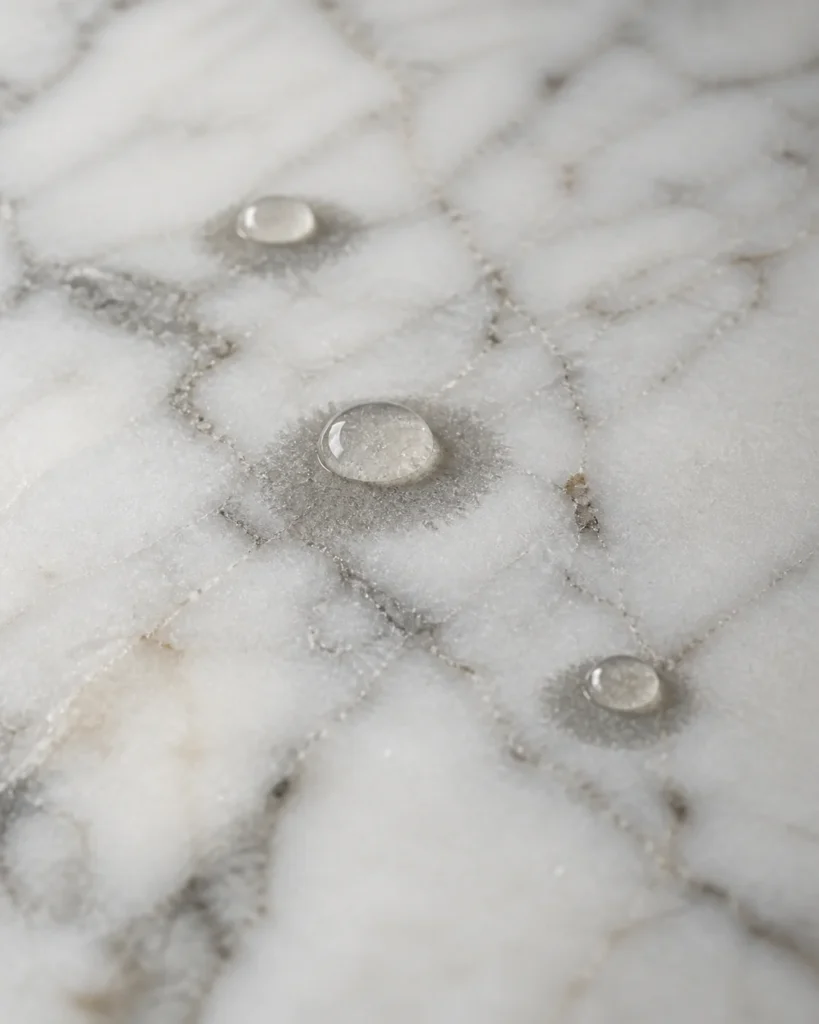
Natural stones like marble, granite, limestone, and travertine are porous, so an unsealed surface absorbs spills before you’ve had a chance to clean them up. A splash of red wine on unsealed white marble, or cooking oil left too long on granite, can leave a stain that no amount of scrubbing removes.
Impregnating these stones slows that absorption down. It doesn’t make the stone stain-proof, but it buys enough time to wipe up a spill before it becomes permanent. Beyond stains, impregnation also helps resist mould and mildew growth in humid conditions, which matters in Malaysia’s climate, and reduces wear from daily use. Done properly, it doesn’t change the stone’s gloss, colour, or texture.
| Stone type | Porous? | Needs an impregnator? |
|---|---|---|
| Marble | Yes | Yes, reapplied periodically |
| Granite | Slightly | Often recommended |
| Limestone / travertine | Yes | Yes, reapplied periodically |
| Quartz | No | No |
| Sintered stone | No | No |
What Makes Quartz and Sintered Stone Different?
What Is Quartz?
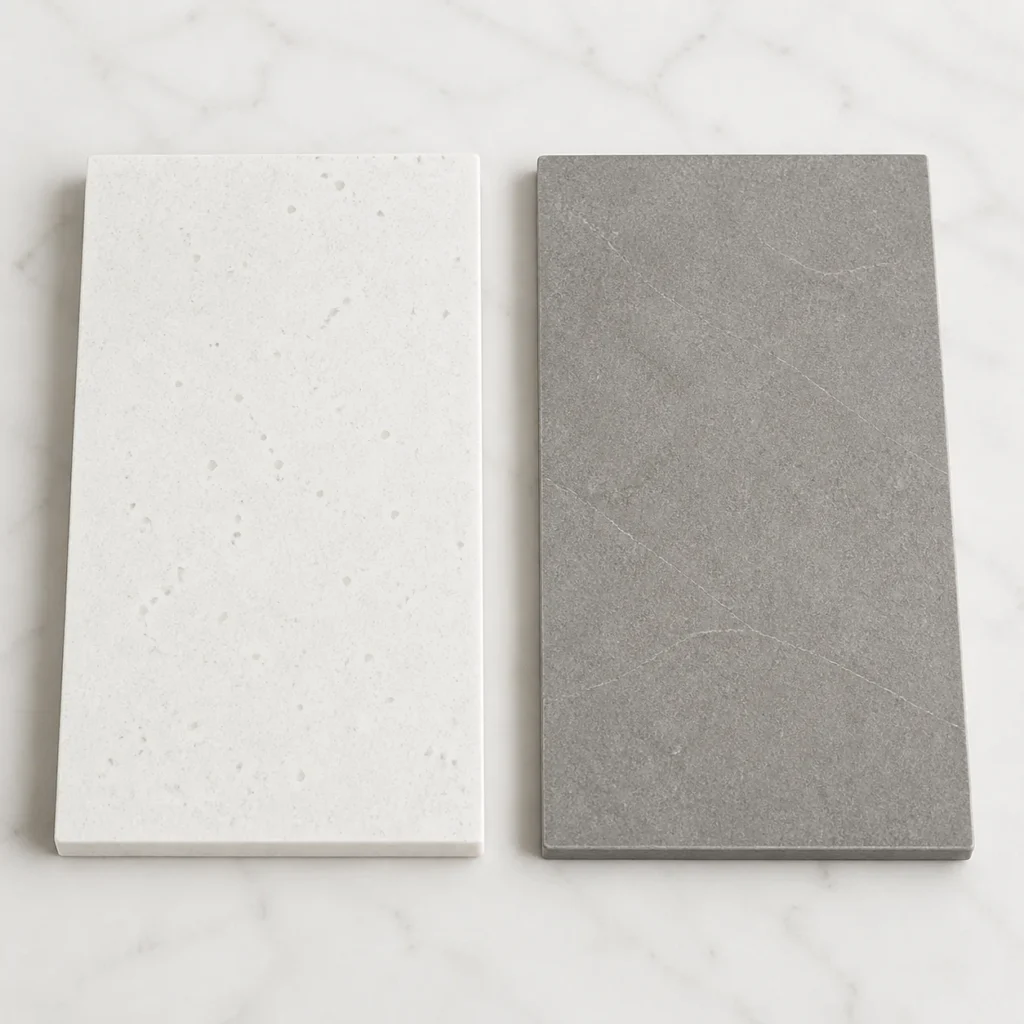
Quartz countertops are engineered from roughly 90-95% crushed natural quartz crystals bound with resins, polymers, and pigments into a dense slab. That resin matrix fills in every gap, leaving the surface non-porous, hard, and resistant to stains, scratches, and bacteria in a way natural granite or marble simply isn’t. For more on how the material is put together, see our guide to what quartz stone is and how it’s made.
What Is Sintered Stone?
Sintered stone is made by subjecting natural minerals, such as quartz, feldspar, and silica, to extreme heat and pressure in a process called sintering. That process compacts the minerals into an even denser, non-porous slab than quartz, which is why sintered stone brands like Dekton and Neolith hold up outdoors as well as indoors. Our deep dive into how sintered stone is made covers the sintering process in more detail.
Should You Use an Impregnator on Quartz?
No. Quartz is manufactured to be non-porous, so most manufacturers state outright that sealers and impregnators aren’t necessary, and can even work against you. Because quartz doesn’t absorb liquids the way natural stone does, a spill sits on the surface until you wipe it away with a damp cloth and mild soap.
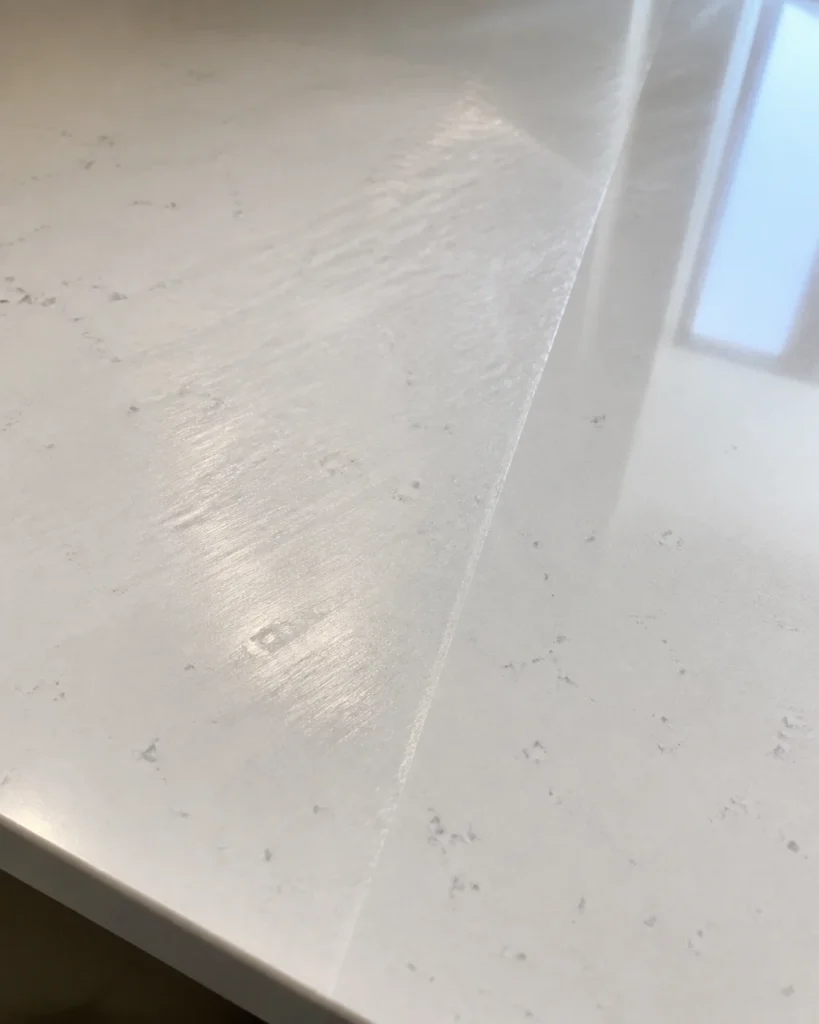
Applying an impregnator to quartz can leave a streaky or hazy finish, because the product has no pores to soak into and instead sits unevenly on top of the resin. It can also void your manufacturer’s warranty, particularly if it changes the surface’s appearance or interferes with the resin’s built-in stain resistance. If you’re weighing quartz against its actual limitations rather than mythical ones, our guide on the disadvantages of quartz stone countertops is a more useful read than any sealer’s marketing copy.
Should You Use an Impregnator on Sintered Stone?
No, and for an even stronger reason than quartz. Sintered stone’s high-pressure, high-temperature manufacturing process leaves it virtually impervious to moisture, so there’s no pore structure for an impregnator to fill in the first place.
Leading sintered stone manufacturers advise against sealers in their care instructions, recommending only a neutral pH cleaner, water, and a soft cloth. Sealing a surface that’s already sealed by design risks leaving a residue, dulling the finish, or voiding your warranty, for no protective benefit in return.
What Happens If You Seal Quartz or Sintered Stone Anyway?
Marketing around stone care products can make it feel like more protection is always better, but that’s not how these two materials work. Quartz and sintered stone were engineered specifically to remove the problem impregnators solve, so there’s nothing left for the product to do.
An impregnator also isn’t a polish. It works invisibly beneath the surface, so it can’t add shine or deepen colour. On quartz or sintered stone, any visible change in sheen or colour after sealing is a defect from product residue, not an improvement.
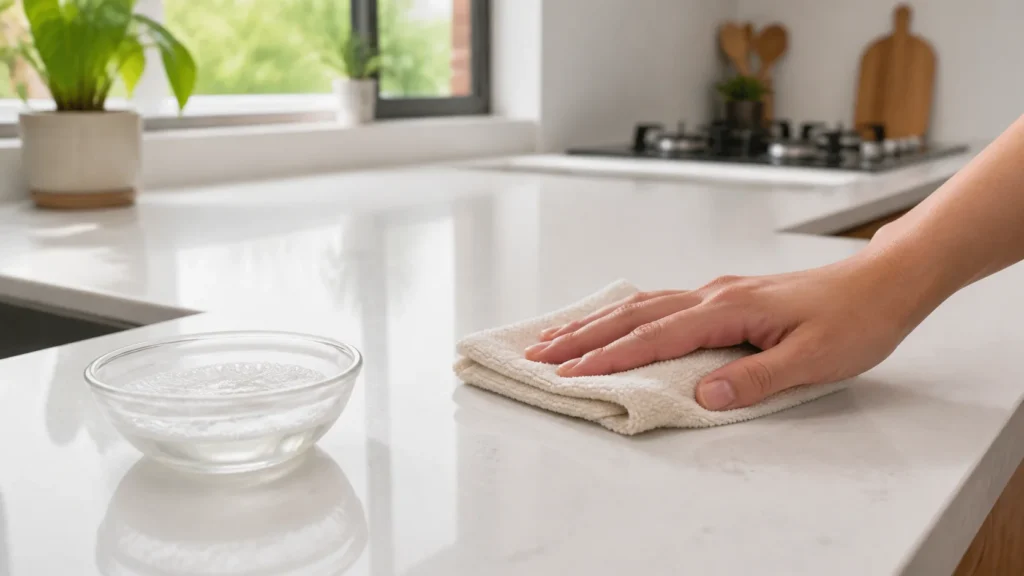
How Do You Actually Care for Quartz and Sintered Stone?
Skip the sealing and stick to routine care instead:
- Wipe up spills promptly with warm water and mild detergent.
- Skip abrasive pads and harsh chemicals like bleach or ammonia.
- Use trivets and chopping boards to guard against heat and scratches.
- Follow your manufacturer’s specific care instructions.
For stubborn marks, a gentle cleaner made for engineered stone works better than a strong acid or alkaline product, which can dull the surface over time. If what you’re actually dealing with is mould around the sink or edges rather than a stain, that’s a separate issue worth reading up on: see why mould on your countertop usually isn’t the stone’s fault.
FAQ
Do quartz countertops need to be sealed? No. Quartz is manufactured to be non-porous, so sealing offers no protection and can leave a hazy film or void your warranty.
Does sintered stone need an impregnator? No. Sintered stone is even less porous than quartz due to its high-pressure manufacturing process, so there are no pores for an impregnator to fill.
What’s the difference between an impregnator and a topical sealer? An impregnator soaks into the stone’s pores and works invisibly beneath the surface, while a topical sealer sits on top and can change the sheen or texture.
Will an impregnator make my countertop shinier? No. Impregnators aren’t polishes. Any added shine or colour change on quartz or sintered stone from a sealer is a sign of residue, not a benefit.
Which stones actually need an impregnator? Porous natural stones like marble, granite, limestone, and travertine benefit from periodic impregnation to slow down stain absorption.
Conclusion
Impregnators earn their keep on porous natural stone like marble, granite, and limestone, where they buy you time to wipe up a spill before it stains. Quartz and sintered stone don’t share that weakness, so sealing them adds cost and risk without any real protection. Trust the engineering already built into your countertop, and stick to sensible daily care instead.
If you’re not sure what your surface needs, ask before you reach for any sealer. Contact us and we’ll tell you exactly what your countertop needs, and just as importantly, what it doesn’t.