

Interior and exterior stone wall cladding need different materials. Sintered stone and granite work in both places, exterior-rated porcelain slab can go outdoors, and quartz stone and compressed marble belong indoors only.
A homeowner in Petaling Jaya once asked us to clad the gate wall of their terrace house with the same quartz stone they’d fallen for on a showroom countertop. The colour was gorgeous, the price fit the budget, and it looked flawless indoors. We had to say no. After a year or two of equatorial sun, that slab would have turned patchy and yellow on the wall facing the street.
This part of stone wall cladding doesn’t get talked about enough. If you already know what stone wall cladding is, this guide goes one level deeper: which materials belong indoors, which belong outdoors, and why getting it wrong is one of the pricier mistakes in a Malaysian renovation.

Key Takeaways
- Indoor walls never see UV or rain, so almost any quality stone works there.
- Outdoor walls in Malaysia need a material with no resin binder and near-zero porosity.
- Sintered stone and granite suit both interior and exterior walls.
- Quartz stone yellows under direct sun and compressed marble absorbs rain, so keep both indoors.
- Exterior cladding above ground level often needs mechanical fixing, not just adhesive.
Why Are Indoor and Outdoor Walls Different Problems?
An interior wall and an exterior wall ask the material to do very different jobs. Treating wall cladding as one decision (pick a material, pick a look, done) is where most mistakes start.
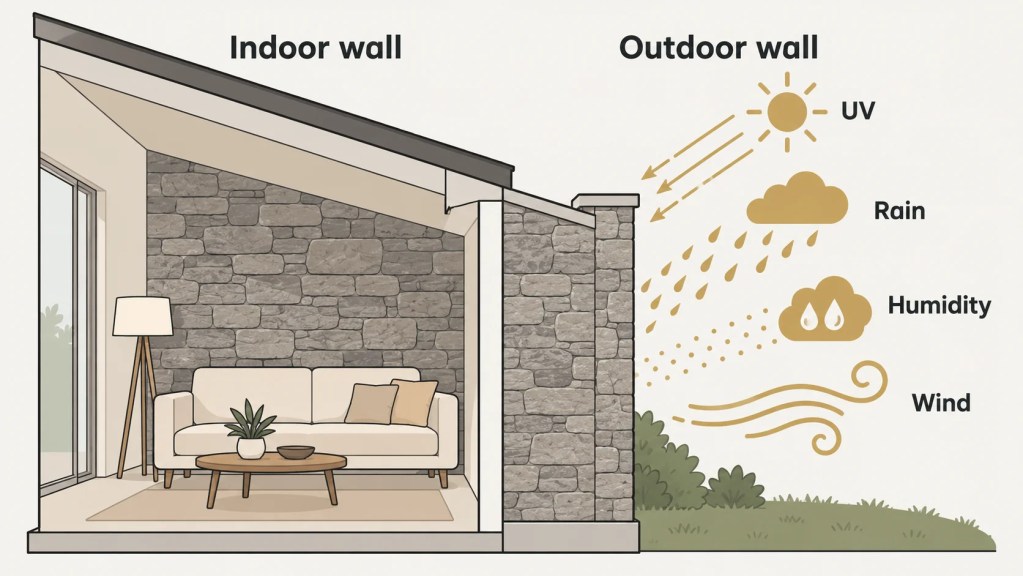
An interior wall lives in a controlled environment. The roof shades it from midday sun, rain never reaches it, and temperature swings in an air-conditioned or ventilated room stay mild. The demands are mostly about looks and upkeep: does it look good, does it wipe clean, does it survive daily knocks and, in a kitchen, oil and steam?
An exterior wall faces Malaysia’s climate with nothing in between. That means near-equatorial UV, sudden monsoon downpours, constant humidity and, on higher floors, real wind load. The fixing method also has to handle thermal expansion and, at height, the risk of a panel coming loose.
Skip this distinction and you end up with a stunning feature wall that only survives indoors, or an outdoor wall that was never built for the outdoors.
What Does Interior Wall Cladding Need to Handle?
Interior cladding needs to look good, clean easily and resist moisture, but it never has to deal with weathering. The priorities shift a little by room.
Living room feature walls need to look striking under artificial and indirect light, shrug off scuffs from furniture, and stay consistent for years. With no UV exposure, almost any quality stone performs well here.
Kitchen backsplashes face a tougher indoor job: high-heat wok cooking, oil splatter, steam, and the turmeric and chilli stains that come with Malaysian food. The material needs to be non-porous and easy to wipe, but it still never sees rain or direct sun.
Bathroom walls deal with constant humidity and standing moisture near the shower. Low porosity matters here because of mould risk in Malaysia’s already humid indoor air, not because of weathering.
In all three rooms, UV resistance doesn’t matter. That opens up the full range of stone cladding materials, including some that would fail outright outdoors.

What Does Exterior Wall Cladding Need to Handle?
Exterior cladding has to survive five conditions that never let up in Malaysia.
Direct UV exposure. Malaysia sits close to the equator, so sunlight is intense and near-vertical most of the year. Any material with a resin binder can break down under that UV. The colour fades or yellows, and the change is permanent.
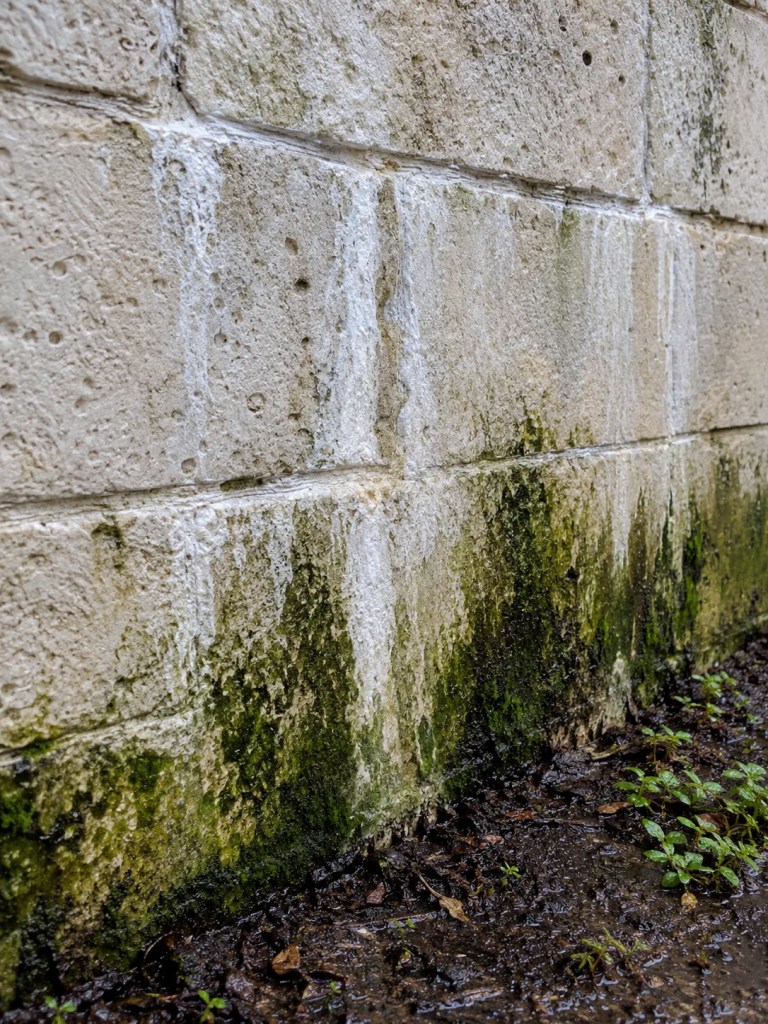
Heavy monsoon rain. A porous material absorbs water again and again over the years. That leads to staining, efflorescence (the chalky white residue you sometimes see on exterior walls), and eventually a weaker bond to the wall.
Constant humidity. Outdoor surfaces here rarely dry out fully between showers. Any texture or porosity gives mould and algae spores a place to settle.
Temperature cycling. Exterior panels heat up under direct sun and cool quickly when rain hits. Repeated expansion and contraction stresses both the stone and whatever holds it to the wall.
Wind load at height. On landed homes this rarely matters. On condominium facades (the outer face of the building), or any cladding well above ground level, it becomes a structural question, which is why high-rise facades are usually mechanically fixed rather than simply glued.
Which Materials Work Indoors, Outdoors or Both?
Sintered stone and granite work in both settings, porcelain slab works outdoors only in exterior-rated products, and quartz stone and compressed marble are interior only. Here’s the detail behind each.
Sintered Stone: Works Indoors and Outdoors
Sintered stone is the material we recommend most often for exterior walls, and it’s excellent indoors too. It’s made by compressing natural mineral powders under intense heat and pressure, which produces a dense, almost non-porous slab with no resin at all.
With no resin to break down, sintered stone holds its colour on a west-facing gate wall that takes the full afternoon sun. Monsoon rain can’t soak in, so staining and efflorescence aren’t a worry. Moca Compact and Dekton are the two brands most often used for exterior projects in Malaysia. If the premium end of the category is new to you, our guide on what Dekton is covers what sets it apart.
Indoors, it adds strong scratch resistance, which makes it a low-maintenance pick for busy feature walls.
Porcelain Slab: Indoors Yes, Outdoors Only If Rated
Porcelain slab is where homeowners get confused, because not every slab is made to the same specification. Fired porcelain is naturally weather-resistant, but thickness, firing quality and the product range all decide whether a given slab is rated for exterior use.
The same caution that applies to porcelain slab for countertops applies here: a slab made for a light interior wall isn’t automatically fit for a facade exposed to rain and thermal cycling. Ask your fabricator to confirm the specific product is rated for exterior or facade use before it goes on an outdoor wall. For how porcelain slab compares with standard tiles on walls in general, see porcelain slab vs tiles for wall cladding.
Quartz Stone: Interior Only
Quartz stone is the material homeowners most often want outdoors, and the one we most often talk them out of. It’s roughly 90 to 93% natural quartz bound with polymer resin and pigment. The quartz is stable, but the resin isn’t UV-resistant. Under Malaysia’s year-round sun, the resin breaks down and the surface yellows or turns dull, permanently. Our guide on the disadvantages of quartz stone countertops covers this discolouration in more detail.
Keep quartz for living rooms, kitchen backsplashes and bathrooms, anywhere direct sunlight isn’t a daily factor.
Granite: Indoors and Outdoors, With a Weight Caveat
Granite has a long track record outdoors in Malaysia, most visibly on gate walls, porch columns and building facades. It’s naturally weather-resistant and has no resin, so UV isn’t a problem. For how it performs as a material overall, see whether granite is still the best choice for Malaysian kitchens.
The catch is weight. Granite is much heavier than sintered stone or porcelain slab of the same size. For a full-height feature wall in a high-rise condo, the internal partition wall may not carry it. On landed homes and ground-level exterior walls, weight is far less of an issue.

Compressed Marble: Interior Only
Compressed marble is more porous than sintered stone or porcelain slab, so it doesn’t belong outdoors in Malaysia. Rain and humidity lead to staining and surface wear over time. Indoors, especially on bathroom and feature walls where a softer, classic look is the goal, it works well. Just never specify it for a garden wall or facade.
Interior vs Exterior Stone Cladding: Quick Reference
| Material | Interior | Exterior |
|---|---|---|
| Sintered Stone | Excellent | Excellent |
| Porcelain Slab | Excellent | Only exterior-rated products |
| Quartz Stone | Excellent | Not suitable (UV yellowing) |
| Granite | Excellent (weight limits in high-rise) | Excellent |
| Compressed Marble | Good | Not suitable (porous) |
Does Installation Change Between Indoors and Outdoors?
Yes. Interior walls are usually fully bonded with adhesive, while exterior walls, especially above ground level, often need mechanical fixing as well.
Most interior feature walls are fully bonded to the wall with cement adhesive. That gives continuous support across the back of the panel, which matters because sintered stone isn’t naturally impact-resistant. A fully bonded slab is far less likely to crack under a hard knock than one on a hollow-backed dry-fix system.
Exterior walls, particularly facades above ground level, often use mechanical fixing on top of or instead of adhesive: anchors, clips or a ventilated cladding frame. This handles the wind load and thermal cycling covered earlier. If you’re planning cladding above the ground floor of a landed home, or on a condo facade, have a qualified installer assess the wall, the height and the structural requirements before any material is ordered.

How Is Wall Cladding Priced?
Interior and exterior cladding are both usually priced by slab, plus fabrication, plus installation, rather than the single supply-and-install rate you’d see for a countertop. Exterior jobs can cost more where mechanical fixings, weatherproof sealants or drainage details are needed. For real slab and installation figures, see our guide on whether a sintered stone feature wall is worth the investment. For an accurate quote on your own wall, a stone specialist needs to see the location, height and substrate.
FAQ
Can quartz stone be used for exterior wall cladding in Malaysia? No, quartz stone shouldn’t be used on exterior walls in Malaysia because its resin binder yellows under direct UV. Keep it for indoor walls such as feature walls, backsplashes and bathrooms.
What is the best stone for exterior wall cladding in Malaysia? Sintered stone is the most reliable choice for exterior wall cladding in Malaysia because it has no resin and almost no porosity. Granite is also a proven option where the wall can carry its weight.
Is porcelain slab suitable for outdoor walls? Porcelain slab is suitable for outdoor walls only when the specific product is rated for exterior or facade use. Confirm the rating with your fabricator before ordering.
Does exterior stone cladding need a different installation method? Exterior stone cladding often needs mechanical fixing, such as anchors, clips or a ventilated frame, especially above ground level. Indoor walls are usually fully bonded with adhesive.
Is compressed marble good for wall cladding? Compressed marble is good for interior wall cladding but not for exterior walls. Its porosity means Malaysian rain and humidity will stain and wear it down outdoors.
Conclusion
The real question isn’t which stone cladding is “best”, it’s which one suits where it’s going. Indoors, almost every material here can look beautiful for years, because the room does most of the work of protecting it. Outdoors, Malaysia’s sun and rain narrow the field: sintered stone and granite hold up, exterior-rated porcelain slab can work with the right product, and quartz stone and compressed marble should stay inside.
Before you commit to a material, especially for an outdoor wall, ask your fabricator exactly what you’re buying and whether it’s rated for that spot. Two walls that look identical in the showroom can age very differently once they face Malaysian weather. If you’re weighing options for your own home, our team is happy to talk it through.