

What sintered stone is, how it performs in Malaysian kitchens, and what it costs before you commit.
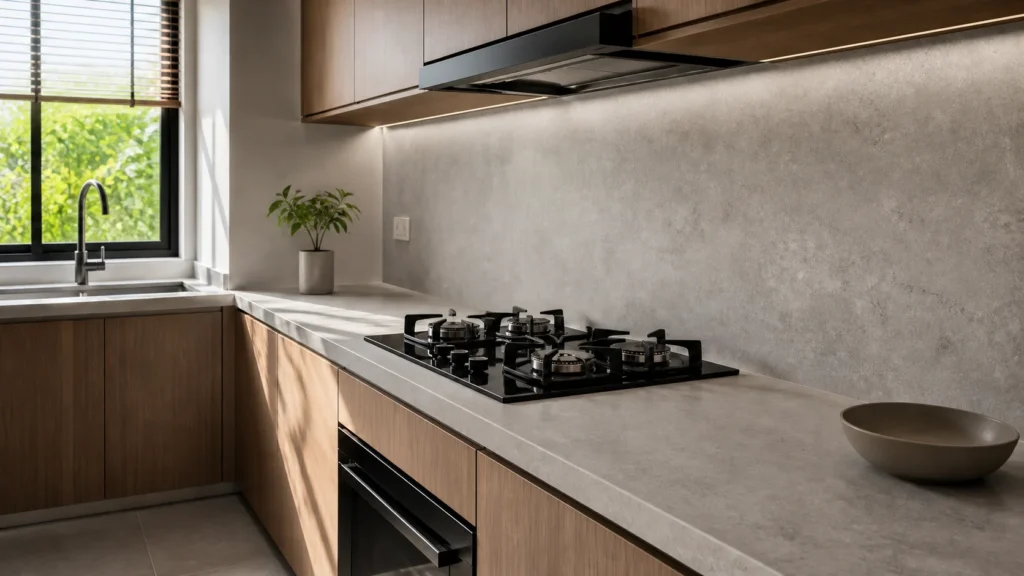
Sintered stone is a resin-free engineered surface made by compressing natural minerals under extreme heat and pressure until they fuse into a dense, almost non-porous slab. It has become one of the most talked-about materials in Malaysian home renovation, and for good reason: it resists heat, stains, and UV better than almost anything else on the market.
Key Takeaways
- Sintered stone is made by compressing silica, clay, and feldspar under up to 25,000 tonnes of pressure and firing at around 1,200°C — no resin involved.
- It withstands heat up to 300°C, scores 8 on the Mohs Hardness Scale, and shrugs off UV, rain, and acidic spills.
- In Malaysia, installed pricing spans roughly RM110 per sqft (Moca Compact) to RM469 per sqft (premium Dekton) — a wide range worth checking before you fall for a showroom sample.
- It costs more than quartz, needs professional installation, and is not a DIY material.
- If the slab chips, the design underneath may not match the surface — repairs are rarely invisible.
What Is Sintered Stone?
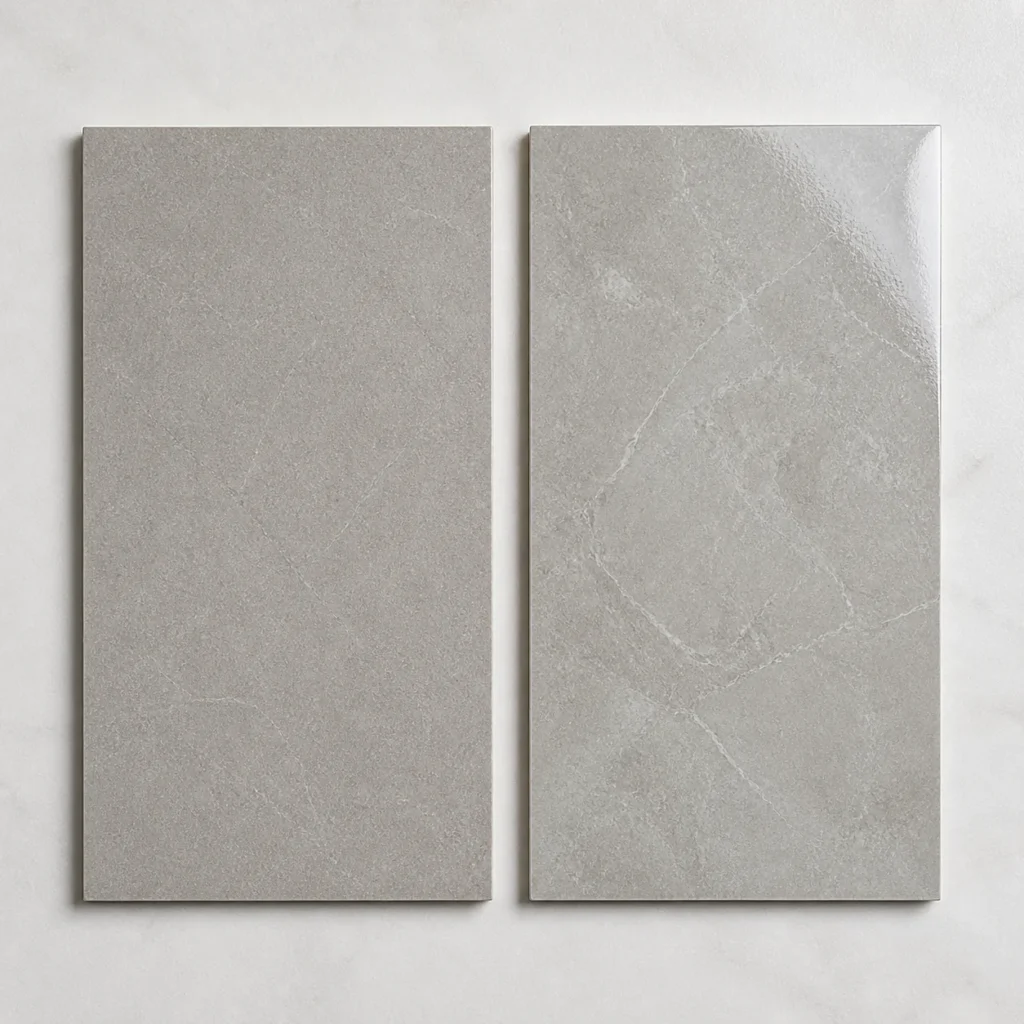
Sintered stone is one of the newest categories of engineered stone, also sold under the names porcelain slab, pressure stone, compact stone, and ultra-compact surface. These terms all describe the same broad manufacturing family.
It is produced through sintering — a process that mimics how granite, marble, and quartzite form underground, compressed into a matter of hours instead of millennia. Natural raw materials such as silica, clay, feldspar, and mineral pigments are subjected to extreme heat and intense compression, fusing the particles together permanently without any binding agent. The result is a dense, ultra-compact material with almost zero porosity.
This is the key distinction from quartz stone: quartz uses resin to bind its minerals, whilst sintered stone contains no resin at all.
Is Sintered Stone the Same as Porcelain Slab?
No — sintered stone and porcelain slab are related but technically distinct, and the difference comes down to composition, pressure, and firing temperature.
Global manufacturers classify their products differently. Neolith, Atlas Plan, and Infinity label their products as porcelain slabs, whilst Dekton by Cosentino (Spain) positions itself as a sintered stone and ultra-compact surface.
| Factor | Sintered Stone | Porcelain Slab |
|---|---|---|
| Composition | Heavier reliance on clay, feldspar, and silica | Higher proportion of glass |
| Compression | Around 25,000 tonnes | 15,000–18,000 tonnes |
| Firing temperature | Around 1,200°C | 800–1,000°C |
| Malaysian market examples | Dekton, Neolith | Moca Compact and most compact/pressure stone products |
For reference, the Eiffel Tower weighs approximately 10,100 tonnes — sintered stone is compressed at more than twice that. The higher pressure and firing temperature give it its characteristic density and heat resistance.
What Are the Features of Sintered Stone?
Sintered stone earns its reputation from six properties that hold up particularly well in Malaysia’s climate and cooking habits.
1. Non-Porous Surface
Sintered stone does not absorb water, making it naturally resistant to stains, mould, bacteria, and odours. This matters in Malaysian kitchens, where humidity and heavy cooking are constant. Spills from turmeric, curry paste, and soy sauce wipe away with just water and a mild detergent.
2. Exceptional Heat Resistance
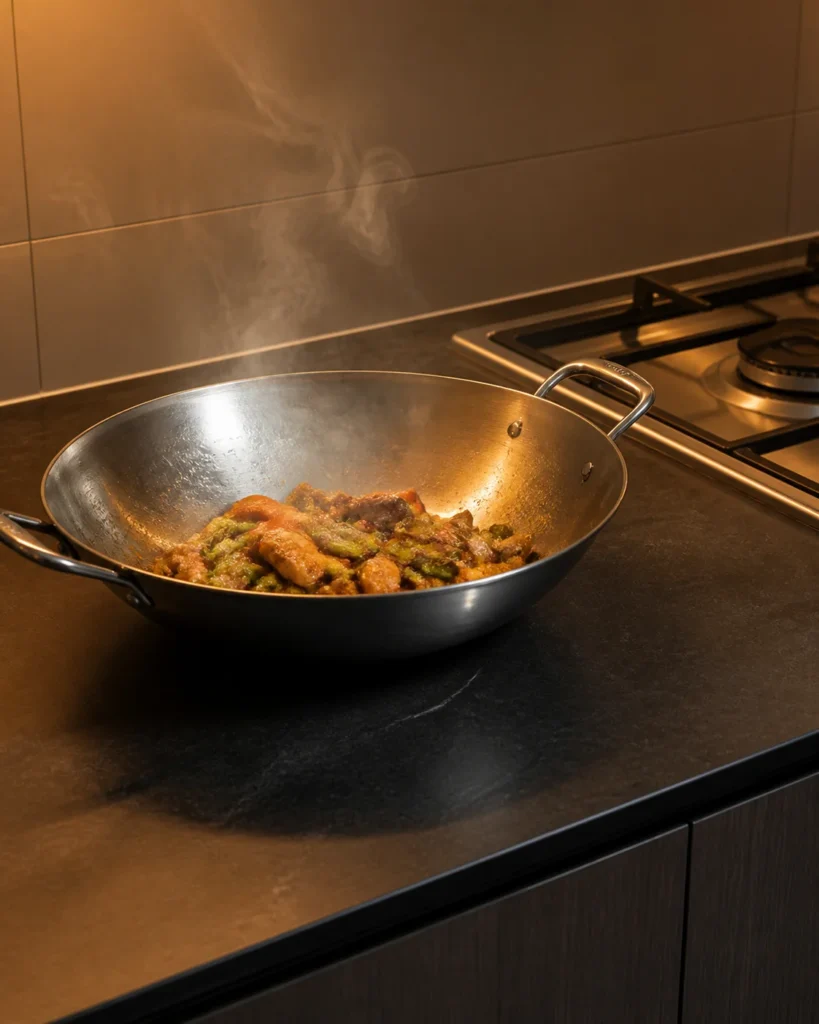
Sintered stone withstands sustained heat of up to 300°C — the highest among commonly used countertop materials. That makes it well-suited to wok cooking over a high gas flame. Read more in Can You Put a Hot Pan on a Sintered Stone Countertop?
3. Weather and UV Resistance
Sintered stone handles Malaysia’s tropical heat, UV radiation, and heavy rain without cracking, fading, or warping. That makes it a strong choice for outdoor countertops, facade cladding, and al fresco dining areas — spaces where other materials degrade quickly.
4. Scratch Resistance
Sintered stone scores 8 on the Mohs Hardness Scale, placing it among the hardest surfaces used in homes. It resists scratches from knives, utensils, and everyday abrasion. See how it compares to other materials in What Is the Mohs Hardness Scale?
5. Chemical Resistance
Sintered stone does not react to acids, alkalis, solvents, or common cleaning products. It handles wine, coffee, lemon juice, bleach, and acetone spills without damage.
6. Eco-Friendly
Sintered stone is made primarily from natural and recycled materials and releases no volatile organic compounds (VOCs). Its manufacturing process also uses less energy and water than some other engineered materials.
What Are the Drawbacks of Sintered Stone?
No material is without limits, and sintered stone has five worth weighing before you commit. For the full list, read What Are the Disadvantages of Sintered Stone?
1. Higher Upfront Cost
Sintered stone costs more than laminate, melamine, or solid surface — and often more than quartz. Premium imported brands like Dekton (Spain) carry a real price premium from import costs and manufacturing complexity. See the full pricing breakdown below.
2. Heavy and Demanding to Install
Sintered stone is dense and difficult to handle. It requires professional installers with specialist tools, plus adequate structural support beneath the cabinetry. It is not a material for DIY installation.
3. Vulnerable to Impact Damage
Sintered stone resists scratches well but can chip or crack under significant force, particularly at edges and corners. A poorly levelled installation makes it more susceptible to stress fractures over time.
4. Costly and Difficult to Repair
If sintered stone chips or cracks, repairs are often costly and hard to make invisible. In many cases, the damaged section needs replacing rather than repairing, which adds to the long-term cost of ownership.
5. Surface Pattern Does Not Run Through the Slab
Sintered stone can feature striking veining and texture, but the design is printed onto the surface rather than running through the full thickness. If the slab chips or is cut, the layer underneath may not match what you see on top.
Homogeneous slabs solve this, at a price. Read Does Sintered Stone Have a Full Body Option in Malaysia? to see when it’s worth paying for.
What Colours and Finishes Are Available?
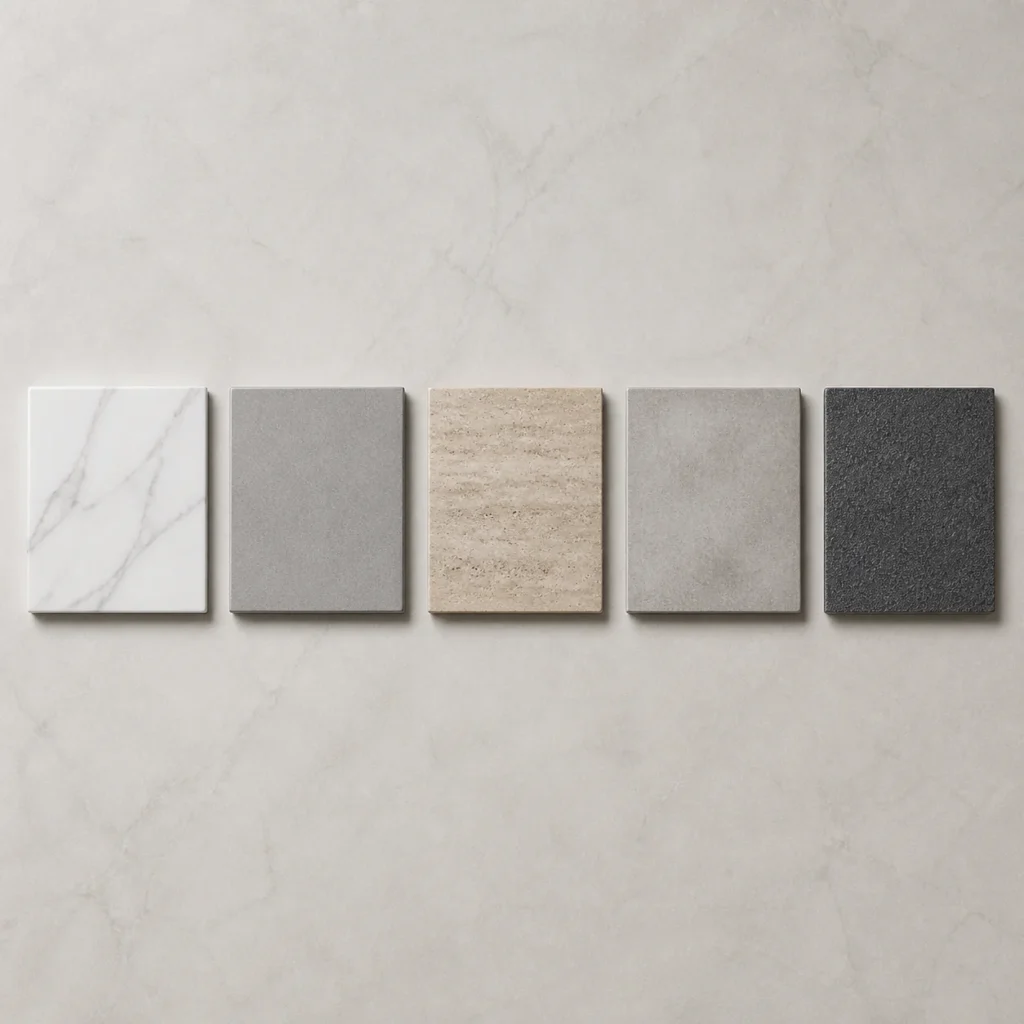
Sintered stone’s biggest design strength is versatility — it can be manufactured in a vast range of colours, textures, and finishes, from natural stone looks such as marble and quartzite to contemporary concrete, wood grain, and metallic finishes. Large-format printing technology means almost any design can be reproduced at scale, which is why Malaysian interior designers reach for it when they want a highly customisable surface that still performs like engineered stone.
Common finishes available in Malaysia include:
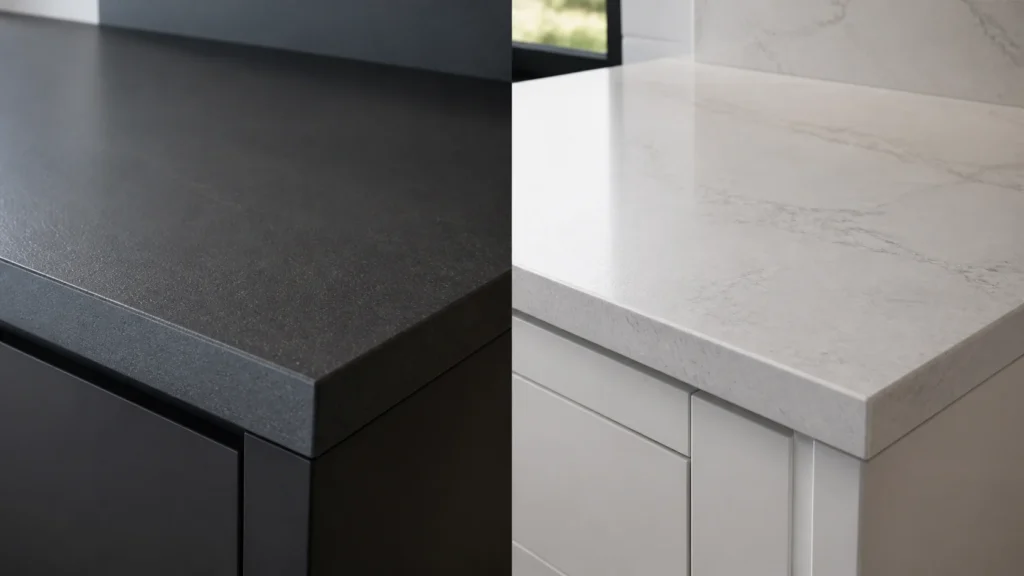
- Polished — high-gloss, reflective surface that enhances colour depth
- Honed — smooth and matte with an understated look
- Leathered or Textured — tactile surface with a rustic character
- Anti-Slip or Grip — suited to flooring and outdoor applications where safety matters
For a side-by-side look at how these compare across brands, read Polished vs Honed vs Leather vs Gloss: The Complete Stone Finish Guide
What Can Sintered Stone Be Used For?
Sintered stone is one of the most versatile surface materials available in Malaysia, suited to both residential and commercial applications.
Countertops
Sintered stone makes durable, functional countertops for kitchens, bathrooms, bars, and islands. It handles pot and pan heat, resists stains from Malaysian cooking ingredients, and stays hygienic and easy to clean in busy households.
Wall Cladding and Facade
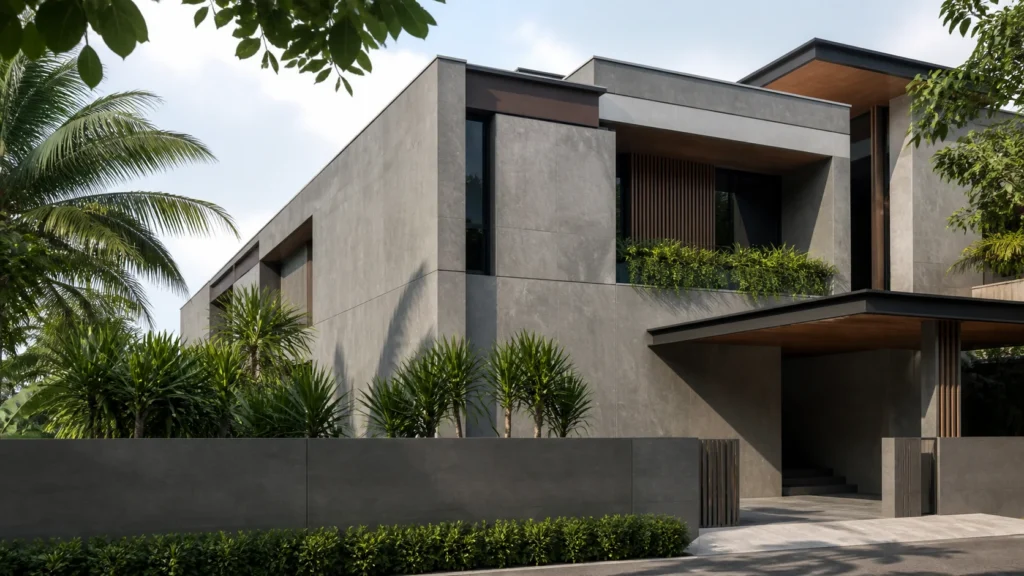
Sintered stone creates striking feature walls and exterior facades for residential and commercial properties. Its UV and weather resistance suit Malaysian outdoor and semi-outdoor spaces particularly well. Read What Is Stone Wall Cladding? to learn more.
Flooring
Sintered stone makes durable, elegant flooring for any room. It withstands heavy foot traffic, resists wear from furniture movement, and comes in anti-slip finishes suited to wet kitchens, bathrooms, and outdoor areas. For the full breakdown, read Sintered Stone Flooring in Malaysia: Pros, Cons, and What to Expect
Other Applications
Beyond countertops, walls, and floors, sintered stone also shows up in fireplace surrounds, backsplashes, shower panels, pool decks, and outdoor furniture tops. Its ability to be fabricated into different shapes, thicknesses, and edge profiles makes it a flexible choice for creative design work.
How Much Does Sintered Stone Cost in Malaysia?
Sintered stone pricing in Malaysia depends heavily on brand and colour group, with a gap wide enough to catch homeowners off guard if they only compare one sample at a showroom.
| Brand | Range | Installed Price (per sqft) | Slab Price (per slab) |
|---|---|---|---|
| Moca Compact | Regular finishes | RM110 | RM1,600 |
| Moca Compact | Homogeneous / Leathered finishes | RM130 – RM150 | RM2,000 – RM2,800 |
| Dekton (Spain) | Entry colour groups (Group 0–1) | RM248 – RM320 | RM3,700 – RM5,300 |
| Dekton (Spain) | Premium colour groups (Group 4–5) | RM469 | RM8,500 – RM11,900 |
Slab prices are the raw material cost per slab (roughly 51–62 sqft) before fabrication and installation — useful for understanding what you’re actually paying for, even though sintered stone still needs a professional installer. Supply and install pricing per sqft is what most Malaysian homeowners will budget against for a full countertop job.
Moca Compact positions itself as the accessible entry point into sintered stone, whilst Dekton’s premium colour groups carry a real price jump. For a full market comparison across all materials, read How Much Does a Quality Stone Countertop Cost in Malaysia? (A 2026 Price Guide)
Is Sintered Stone Right for Your Malaysian Home?
Sintered stone is one of the most technically capable surface materials available in Malaysia today. It performs best in demanding environments — wok-cooking kitchens, humid bathrooms, and outdoor spaces where other materials struggle over time.
That said, it costs more and demands professional installation. If budget is a primary concern or your kitchen sees relatively light use, quartz stone may offer a better balance of cost and performance for your situation. Compare the two directly in Quartz vs Sintered Stone: Don’t Make This RM20,000 Mistake in Your Malaysian Kitchen or Is Sintered Stone Better Than Quartz? A Malaysian Homeowner’s Honest Guide
FAQ
Is sintered stone waterproof? Sintered stone is non-porous and does not absorb water, so it resists stains, mould, and bacteria without needing a sealant — a genuine advantage in Malaysia’s humidity.
Can sintered stone crack or chip? Yes. Whilst it resists scratches and heat exceptionally well, sintered stone can chip or crack under significant impact, particularly at edges and corners, and repairs are often costly.
How much does sintered stone cost in Malaysia? Installed pricing ranges from around RM110 per sqft for Moca Compact’s regular finishes to RM469 per sqft for Dekton’s premium colour groups — the brand and colour group you choose make a real difference to the final bill.
Is sintered stone better than quartz for a Malaysian kitchen? It depends on your budget and how hard your kitchen gets used. Sintered stone handles heat and UV better, but quartz costs less and still performs well for typical household cooking.
Can sintered stone be used outdoors in Malaysia? Yes. Its UV and weather resistance make it well-suited to outdoor countertops, facade cladding, and al fresco dining areas that would degrade other materials over time.
Conclusion
Sintered stone earns its reputation with genuine performance — it resists heat, stains, scratches, and Malaysia’s weather better than most surface materials on the market. The trade-off is cost and the need for professional installation, so it pays to weigh your budget and how hard the space will actually be used before committing.
For further information on sintered stone options available in Malaysia, including Dekton and Moca Compact, feel free to contact us. We would love to help you find the right surface material for your home project.