

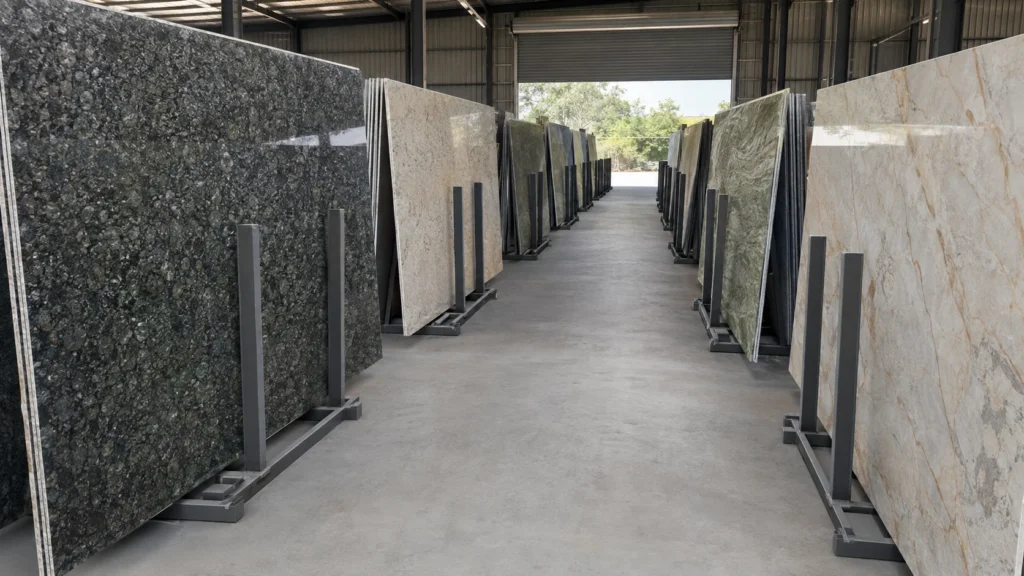
Granite and quartzite are two geologically different stones, but the stone trade has used “granite” as a catch-all label for hard natural stone for decades, and “quartzite” now carries a premium that tempts some suppliers to apply it loosely. So the same slab can be called granite in one KL showroom and quartzite in the next.
You’re not imagining the confusion. It’s one of the most common naming problems in Malaysia’s natural stone industry, and it changes what you pay, how the surface performs, and how you’re meant to look after it.
Key Takeaways
- Granite is an igneous rock formed from cooled magma; quartzite is a metamorphic rock formed when sandstone is fused under heat and pressure. Different origins, different behaviour.
- Quartzite is usually harder (Mohs 7–8) and less porous than granite (Mohs 6–7), so it resists scratches and stains better in a busy kitchen.
- “Granite” has been a commercial catch-all in the global stone trade for decades, which is why genuine quartzite often arrives in Malaysia labelled “Taj Mahal Granite” or similar.
- The reverse also happens: because quartzite commands higher prices, ordinary granite sometimes gets relabelled as quartzite to justify a premium.
- Quartzite and quartz stone are not the same thing. One is quarried, the other is manufactured in a factory.
- Ask for the geological classification, the quarry of origin, and a technical data sheet before you commit. A supplier who can’t answer is telling you something.
What Is the Difference Between Granite and Quartzite?
Granite forms from molten magma that cooled slowly underground, whilst quartzite forms when quartz-rich sandstone is squeezed and heated until the grains fuse into a single dense mass. That difference in origin explains almost every practical difference you’ll notice in a kitchen.
What is granite?
Granite is an igneous rock. Slow cooling deep below the surface lets large mineral crystals develop, which gives granite its speckled look. Its main minerals are quartz, feldspar and mica, with feldspar usually taking the largest share.
Because it forms under heat and pressure, granite is hard and durable, sitting around 6 to 7 on the Mohs scale. Malaysian homes have used it for decades, and it still holds up well. If you’re weighing it against newer materials, our guide on whether granite is still the best countertop choice for Malaysian kitchens covers where it wins and where it doesn’t.
What is quartzite?
Quartzite is a metamorphic rock. Sandstone rich in quartz grains gets buried, heated and compressed over millions of years until those grains fuse together. The result is often harder than granite, typically 7 to 8 on the Mohs scale.
Visually, quartzite flows rather than speckles. It carries dramatic veining across whites, greys, and soft pinks and blues, which is why homeowners who want a marble look without marble’s fragility keep asking for it. If hardness ratings are new to you, our explainer on the Mohs hardness scale and why it matters puts those numbers in context.
Granite vs quartzite at a glance
| Granite | Quartzite | |
|---|---|---|
| Rock type | Igneous (cooled magma) | Metamorphic (fused sandstone) |
| Main minerals | Feldspar, quartz, mica | Quartz, near-pure in good grades |
| Mohs hardness | 6–7 | 7–8 |
| Look | Speckled, visible crystals | Flowing veins, marble-like |
| Porosity | Moderate | Low |
| Sealing | Every 1–2 years | Less often, still recommended |
| Fabrication | Straightforward | Harder, slower, costs more to cut |
The simplest way to hold it in your head: granite is born from fire, quartzite is made by pressure. Both contain quartz, and that shared ingredient is one reason the names get tangled. It’s far from the only reason.
Why Do Malaysian Suppliers Mix Up the Two Names?
Most of the time, nobody is trying to cheat you. Four separate forces push the names together, and the result for a homeowner is the same either way: confusion at the point of buying.
“Granite” is a commercial catch-all
In the international stone trade, “granite” has long meant almost any hard natural stone that isn’t marble. Quartzite, gneiss, schist and diorite all get sold under that label routinely. This isn’t a Malaysian habit. It’s global practice going back decades.
When Malaysian suppliers import slabs from Brazil, India or Italy, the stone arrives with a commercial name rather than a geological one. A Brazilian quartzite might land here labelled “Taj Mahal Granite” or “Fantasy Brown Granite” purely because the exporter filed it under the broad granite category.
Quartzite sounds more premium
Awareness of quartzite has grown among homeowners and interior designers over the past few years. It’s genuinely harder and often more striking than typical granite, so it commands higher prices. Some suppliers noticed, and started relabelling granite slabs as quartzite to justify the premium.
This is the version of the confusion that costs you money. If you’re paying quartzite prices, you should be getting quartzite performance.
Nature doesn’t draw clean lines
Some stones genuinely sit in the grey zone. A slab might carry characteristics of both rock types depending on the exact conditions it formed under, and geologists themselves disagree on how to classify certain stones. Some stones sold as quartzite contain enough feldspar and mica to be closer to gneiss, whilst some granites have such high quartz content that they behave like quartzite in practice.
Names shift in transit
A slab can pass through several countries, languages and distributors before it reaches a Kuala Lumpur slab yard. Stone correctly labelled “quartzito” in Portuguese can arrive with a different name attached entirely. Nobody along that chain intended to mislead, but the label on the slab is now unreliable.
How Does the Naming Confusion Affect Your Countertop Decision?
It affects three things you’ll live with: how the surface performs day to day, whether the price you paid was fair, and whether you’re maintaining it correctly. On a surface you’ll use every day for fifteen years or more, none of those are small.
Performance differences you’ll notice
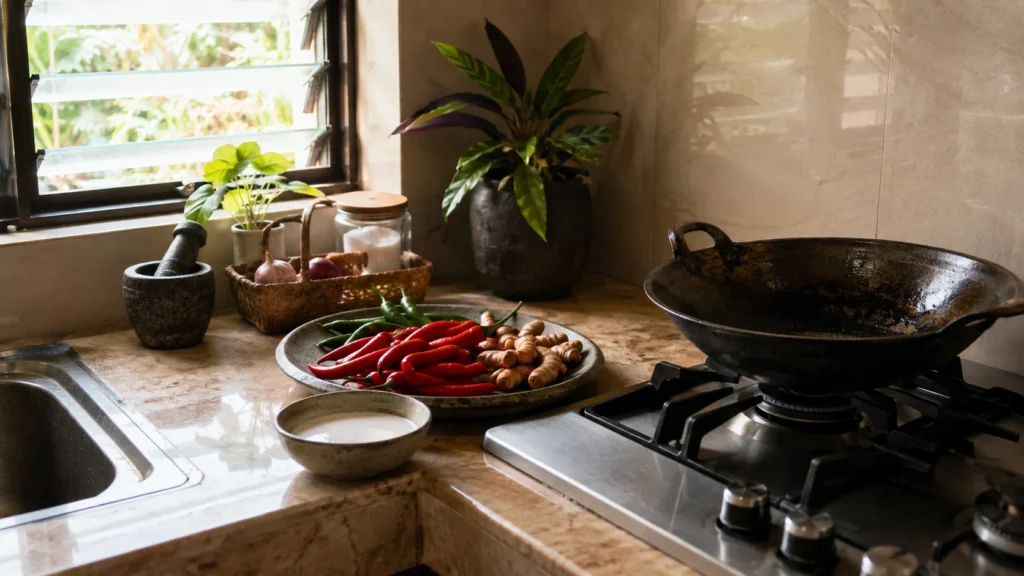
Staining. Granite is more porous than quartzite. In a Malaysian kitchen where turmeric, chilli paste and coconut milk are everyday ingredients, porosity is not an abstract concern. Granite generally needs sealing every one to two years to hold its stain resistance. Good quartzite, with its tightly fused grains, absorbs less and needs sealing less often.
Heat. Both stones handle heat well, which matters for wok cooking and high-flame methods. Quartzite has a small edge thanks to its denser structure and higher quartz content.
Scratches. Quartzite’s higher Mohs rating means it holds up better against knives, ceramic bases and grit dragged across the surface. In a family kitchen, that shows up as a top that still looks new in year five.
Humidity. Malaysia’s climate works on natural stone over time. Denser, less porous stone absorbs less moisture and tends to age better in a wet kitchen or an open-air kitchen extension.
Pricing you can’t verify
Natural stone pricing in Malaysia varies enormously by slab, origin, rarity and appearance, and it’s quoted per slab rather than per square foot. There’s no fixed “granite costs X, quartzite costs Y” formula to check against.
That’s exactly why the name matters. It’s the only handle you have on whether a quote is reasonable. For comparison, engineered quartz is quoted per square foot supply and install, starting from around RM110 per square foot for Zenstone’s entry collections, which gives you a stable reference point that natural stone simply doesn’t have.
Maintenance you might get wrong
Treat a granite top as though it’s quartzite, skip the sealing, and you’ll be dealing with stains that were entirely preventable. Go the other way and you’ll spend money sealing a dense quartzite that didn’t need it, which wastes cash without causing harm.
Either way, you can only follow the right routine if you know what the stone actually is.
Is Quartzite the Same as Quartz Stone?
No. Quartzite is natural stone quarried from the earth, whilst quartz stone is an engineered product made in a factory. They sound almost identical and get used interchangeably in showrooms, which trips up plenty of Malaysian homeowners.
Quartzite is cut from a quarried block and installed in its natural form. Every slab is one of a kind, the same way granite is.
Quartz stone combines roughly 90 to 95% ground quartz crystals with polymer resins and pigments, pressed and cured into a slab. Our guide on what quartz stone is and how it’s made walks through the manufacturing process.
Some suppliers use “quartz” as shorthand for all three materials, which helps nobody. When you’re discussing options, ask directly whether they mean a natural stone (granite or quartzite) or an engineered one (quartz stone). For a side-by-side look at how natural and engineered surfaces compare in a kitchen, see our guide on the difference between quartz and granite kitchen tops.
How Can You Tell If a Slab Is Granite or Quartzite?
Look at the pattern, test the surface, and ask for documentation. No single check is conclusive on its own, but together they’ll tell you what you’re standing in front of.
Read the pattern
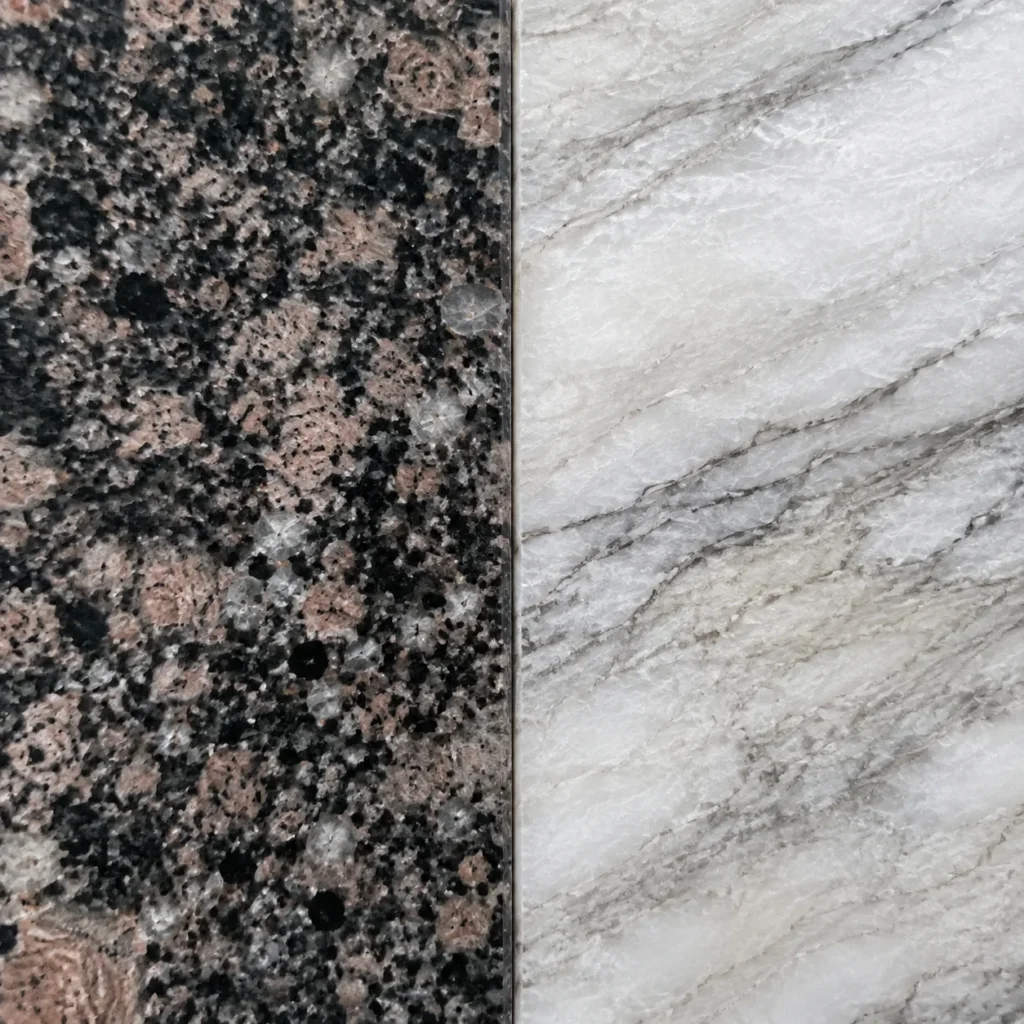
Granite shows a speckled, granular surface with visible crystals of different minerals: black flecks of mica, white or pink feldspar, translucent grey quartz scattered through the slab.
Quartzite has a more uniform base colour with flowing veins or swirls. It reads smoother and less busy than granite. White and grey quartzites in particular can pass for marble at a glance, which is much of their appeal.
Try the scratch test
Because quartzite is harder, scratching a small hidden area with a steel blade tells you something. True quartzite should resist the blade, whilst a softer stone shows a faint mark. It isn’t a laboratory test, but it separates hard stone from soft.
Try the water test
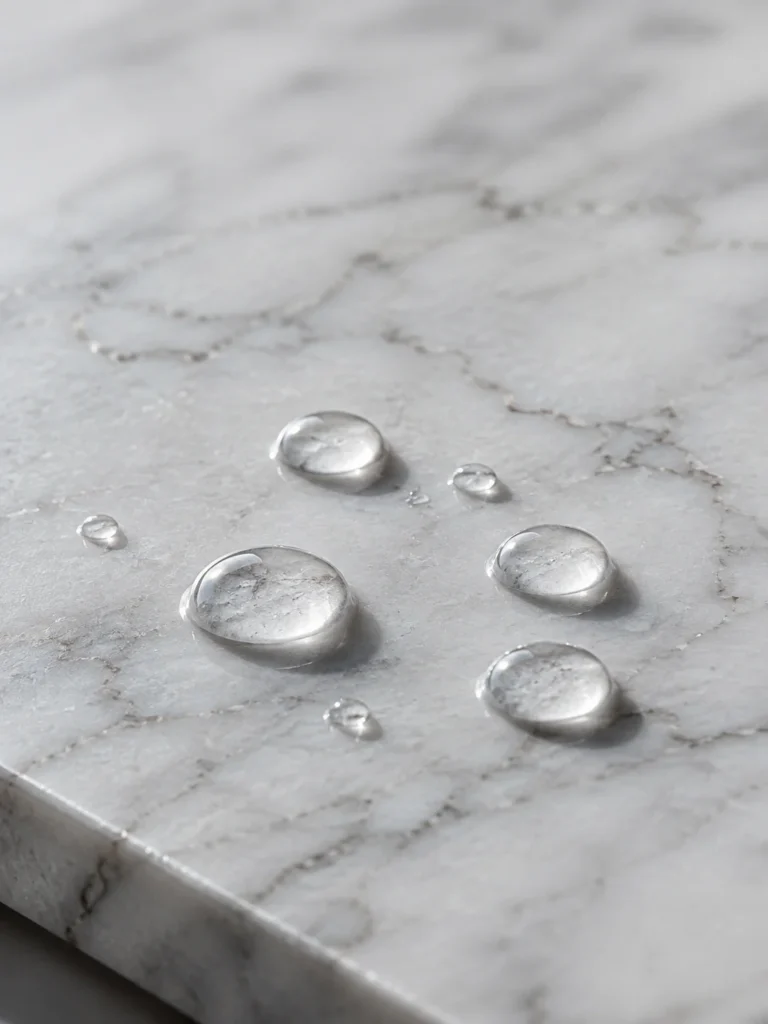
Put a few drops of water on the surface and watch. If the water sits there for several minutes without darkening the stone, you’re looking at something dense, likely quartzite. If the stone darkens almost straight away, it’s more porous, which points to granite or something softer.
Ask for the geological name
Reputable suppliers can tell you the geological classification, not just the commercial name. Ask plainly: is this geologically granite, or is it quartzite? Hesitation or a vague answer is worth noticing.
Better still, ask for the quarry of origin and the technical data sheet. Slabs from established quarries come with documentation covering mineral composition, water absorption and hardness.
What Should You Ask Your Supplier Before Buying?
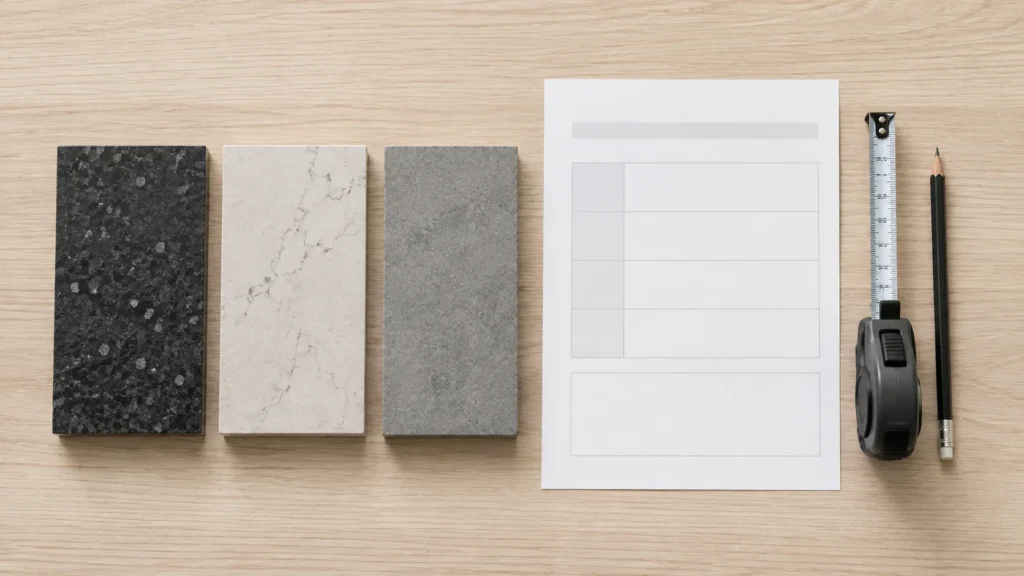
Five questions cover it. Ask them before you pay a deposit, not after the slab is cut.
“What is the geological classification of this stone?” Don’t settle for “it’s a type of granite.” You want to know whether it’s igneous, metamorphic, or something else.
“Where was this stone quarried?” Country and quarry let you research the stone independently. Brazilian quartzites like Taj Mahal are well documented, and their properties are easy to verify.
“Can you provide a technical data sheet?” Water absorption, flexural strength and mineral composition should all be on it. Stone from a reputable source comes with this paperwork.
“What sealing schedule does this stone need?” The answer reveals porosity, which points back to what the stone actually is. Very low porosity suggests quartzite; moderate porosity points to granite.
“What’s the Mohs hardness rating?” Granite lands around 6 to 7, quartzite around 7 to 8. On its own it proves nothing, but it adds to the picture.
Mislabelling isn’t limited to natural stone, either. We’ve documented cases of compressed marble being sold as quartz, which is a more damaging swap because compressed marble stains and scratches in ways real quartz doesn’t. For the full list of questions worth raising with any supplier, see our guide on what to ask before buying a countertop in Malaysia.
FAQ
Is quartzite better than granite for a Malaysian kitchen? Quartzite generally performs better on scratch and stain resistance because it’s harder and less porous, but granite is a proven kitchen surface that costs less and is easier to fabricate. The right answer depends on your budget and how heavily you cook.
Why do suppliers call quartzite “granite”? Because “granite” has functioned as a commercial catch-all in the global stone trade for decades, covering most hard natural stone that isn’t marble. Slabs often reach Malaysia already labelled that way by the exporter.
Can I tell granite and quartzite apart just by looking? Often, yes. Granite reads as speckled with visible mineral crystals, whilst quartzite shows flowing veins over a more uniform base. Grey-area stones exist, so back up the visual check with a scratch test and a request for documentation.
Is quartzite the same as quartz stone? No. Quartzite is quarried natural stone, and quartz stone is engineered from ground quartz and resin in a factory. They perform differently and are priced differently.
How much does quartzite cost in Malaysia? Quartzite is natural stone, so it’s priced per slab rather than per square foot, and the figure depends on the specific slab, its origin and its rarity. Ask for a quote on the exact slab you’re considering rather than a general rate.
Conclusion
Suppliers call granite “quartzite” for a mix of reasons: an old commercial naming habit, a price premium worth chasing, real geological grey areas, and names that shift as slabs pass through half a dozen hands. None of that is your fault, but all of it lands in your lap at the showroom.
The practical takeaway is simple enough. Don’t buy the label, buy the stone. Read the pattern, test the surface, ask for the geological classification and the data sheet, and understand how the two stones differ before you commit.
Granite and quartzite are both good surfaces that will serve a Malaysian kitchen for decades. Knowing which one you’re actually buying is what lets you pay a fair price and look after it properly. If you’d like a straight answer on a slab you’re considering, bring us the details and we’ll tell you what you’re looking at.