

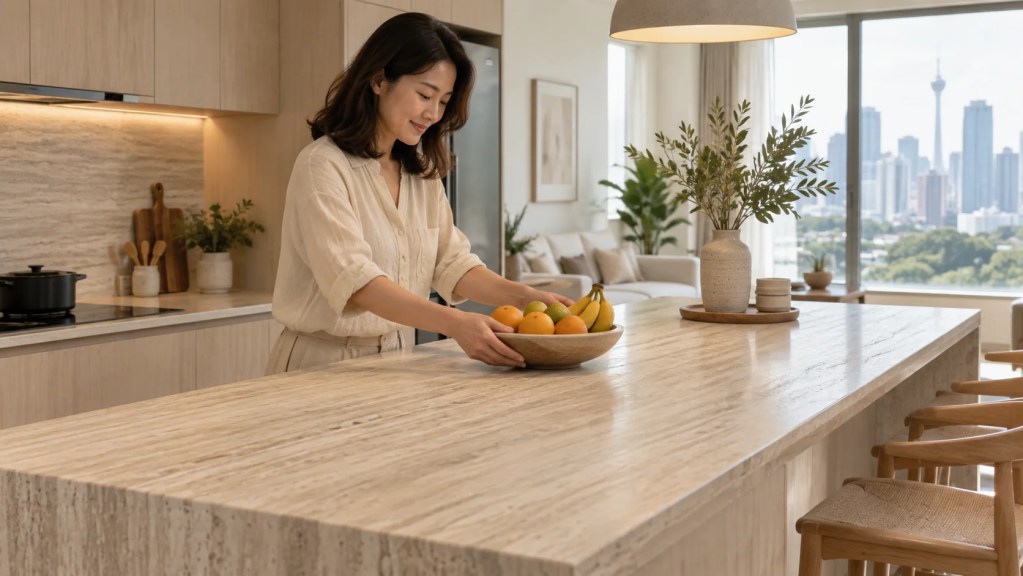
Travertine sintered stone is popular because it gives homeowners the warm, earthy look of Roman travertine on a surface that doesn’t stain, etch or need sealing. That combination matters in Malaysia, where a kitchen top takes wok heat, curry gravy and kopi spills every single day.
Walk into any new showroom or scroll through renovation pages and you will see it: soft beige and ivory slabs with fine horizontal banding, sitting on kitchen islands, vanity tops and feature walls. A few years ago, the same homes were all white marble-look and cool grey. So what changed, and is this look worth putting in your own kitchen?
Key Takeaways
- Interior taste has moved from cool greys to warm, earthy tones, and travertine sits at the centre of that shift.
- Natural travertine is porous, soft and acid-sensitive, which makes it a poor match for Malaysian cooking.
- Travertine sintered stone copies the look on a non-porous surface that needs no sealing and resists acidic food.
- Vanity tops and integrated sinks are where it is most popular, giving bathrooms a seamless, warm hotel-spa look without water stains or sealing.
- At Sinno, travertine designs in sintered stone start from RM110 per sqft supplied and installed.
- The catches are real: the pattern sits on the surface, edges can chip, and fabrication needs a skilled installer.
What Is Travertine Sintered Stone?
Travertine sintered stone is a manufactured slab that reproduces the look of natural travertine, the banded, pitted limestone used in Roman buildings, on a sintered stone body. The design is printed onto the slab and fused under intense heat and pressure, so you get the colour and texture of travertine without the actual holes in the stone.
Natural travertine forms from mineral-rich spring water, and its famous pits are gaps left by escaping gas. Those pits are what give it character. They are also what trap grease and bacteria. Sintered stone, by contrast, is pressed until it is almost non-porous, so spills sit on top instead of soaking in. If you are new to the material, our guide to sintered stone features, drawbacks and uses covers how it is made and where it performs best.
Think of it like a high-quality photograph of travertine printed onto a tile made for a busy kitchen. You keep the view and lose the fragility.
Why Is Travertine Suddenly Everywhere?
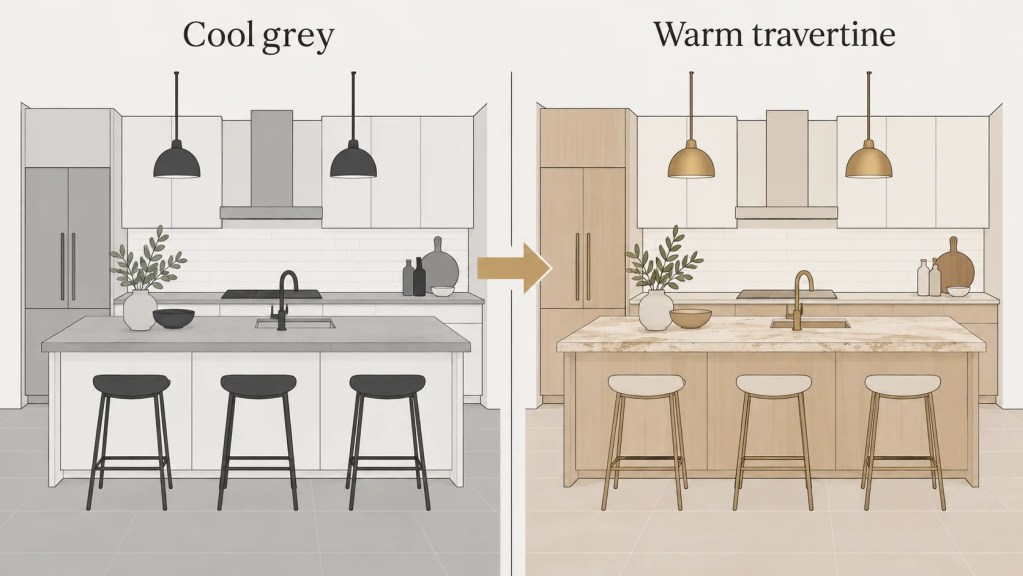
Travertine is popular because home design has turned warm. For most of the last decade, Malaysian condos and landed homes leaned on white, grey and black. That palette is now giving way to beige, sand, ivory and soft tan, and travertine is the stone that best captures those tones. Tile maker Porcelanosa’s trend coverage calls travertine one of the defining looks of recent years, pointing to its calm, Mediterranean character.
The Japandi and wabi-sabi influence
Japandi and wabi-sabi styles favour natural textures, muted colours and a little imperfection. Travertine’s soft banding and matte feel fit that brief far better than glossy, high-contrast marble. Even Cosentino, the maker of Dekton, has written about wabi-sabi as a trend shaping its colour range.
Large slabs make the look work
Travertine used to arrive as small tiles with grout lines everywhere. Sintered stone comes in large format slabs, typically 3200 x 1600mm, so a kitchen island or a feature wall can run as one continuous surface. The result feels closer to a solid block of stone than a tiled wall ever did.
It photographs and ages gracefully
Warm neutrals are forgiving. Fingerprints, light water marks and daily crumbs show far less on a beige matte surface than on a glossy black or pure white one. For a busy family kitchen, that alone wins a lot of people over.
Why Not Just Use Natural Travertine?
Natural travertine struggles in a Malaysian kitchen because it is soft, porous and made of calcium carbonate, which reacts with acid. Lime juice, tamarind, vinegar and tomato-based sauces all etch a dull mark into the surface, and no cleaner can reverse it. The open pits also collect oil and food unless they are filled and sealed regularly.
We covered this in detail in our post on why natural travertine is a poor dining table top. The short version: travertine suits a hotel lobby wall better than a surface where you cut, cook and eat.
| Feature | Natural Travertine | Travertine Sintered Stone |
|---|---|---|
| Porosity | Porous, with open pits | Almost non-porous |
| Sealing | Needs regular sealing | None needed |
| Acidic food (lime, vinegar, tamarind) | Etches the surface | Resists etching |
| Hardness | Soft (around Mohs 3) | Hard, scratch-resistant |
| Heat from a hot wok | Can mark or crack | Handles high heat well |
| Pattern | Unique to each slab, runs through the stone | Printed design on the surface |
| Repair | Can be honed and refilled | Chips are hard to hide |

Is Travertine Sintered Stone Good for a Malaysian Kitchen?
Yes, travertine sintered stone is a strong choice for a Malaysian kitchen, especially if you cook often and want a warm look without constant upkeep. It handles the three things that ruin softer stone: heat, stains and acid.
- Heat: sintered stone copes with high temperatures far better than quartz. Our post on putting a hot pan on sintered stone explains the limits honestly.
- Stains: turmeric, soy sauce and curry wipe away instead of soaking in.
- Humidity: a non-porous surface doesn’t absorb moisture, which helps in a humid Malaysian kitchen or bathroom.
- UV: it doesn’t fade in sunlight, so it also works on outdoor kitchens and wet-kitchen areas near windows.
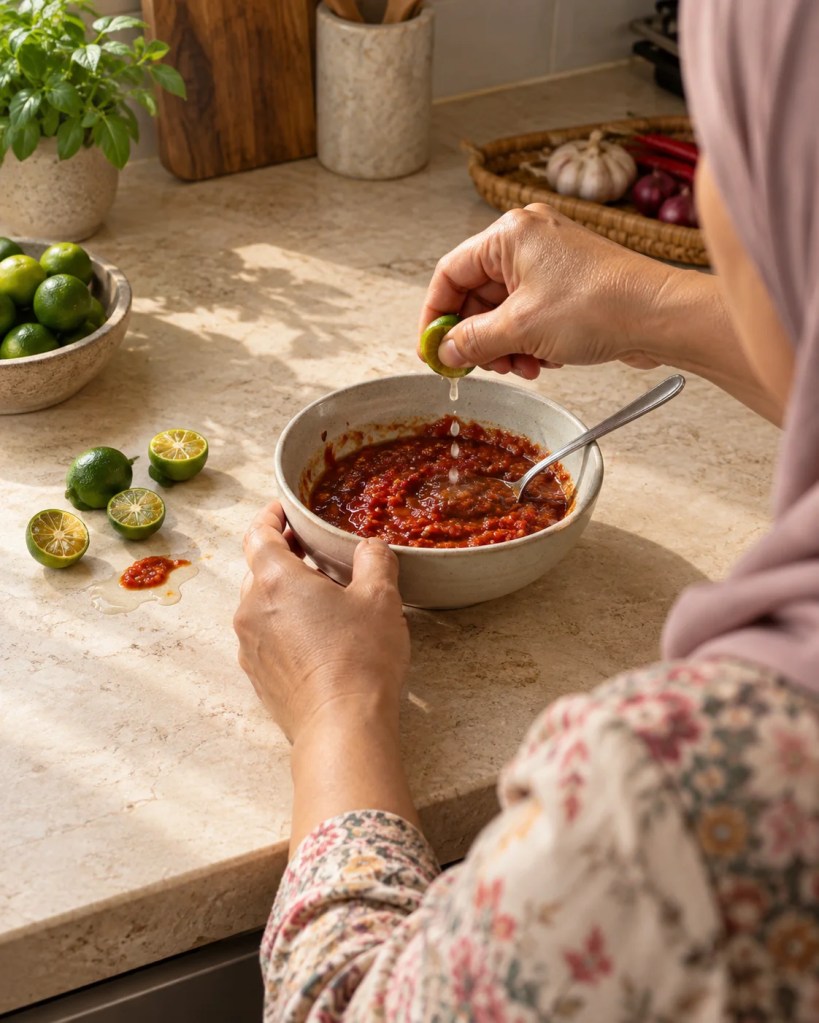
The matte finish most travertine designs come in also hides fine scratches and smudges well. If you are weighing matte against gloss, our stone countertop finish guide walks through how each one behaves day to day.
Why Is Travertine Sintered Stone So Popular for Vanity Tops?
The bathroom vanity is where travertine sintered stone is most popular, because it delivers the warm, spa-like hotel bathroom look on a surface that handles water, soap and cosmetics without a fuss. Many homeowners who aren’t ready to commit a whole kitchen to travertine try it on the vanity first.
It brings the hotel spa look home
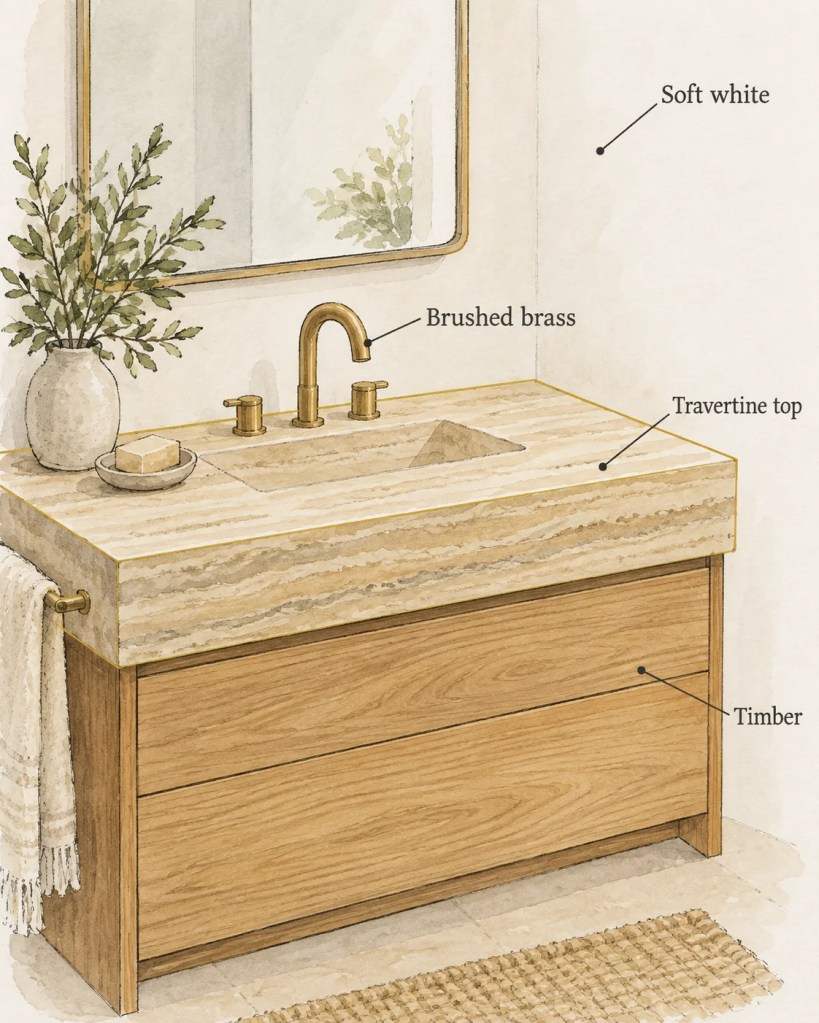
Warm beige stone, timber cabinets and soft lighting are the signature of resort and boutique hotel bathrooms. A travertine vanity top recreates that calm, earthy feel in a Malaysian condo or terrace bathroom, especially when paired with a matching travertine-look wall behind the basin.
Bathrooms are hard on natural stone
A vanity sits in the most humid room of the house, under daily splashes, toothpaste, hand soap, perfume and cleaning products. Natural travertine absorbs water and soap residue into its pits, and acidic bathroom cleaners etch it. The sintered version doesn’t absorb water, so there is no damp, stained edge around the basin and no sealing schedule to keep up.
Integrated sinks make it look like one block of stone
Travertine sintered stone is also popular for integrated sinks, where the basin is fabricated from the same slab as the top instead of dropping in a separate ceramic bowl. The fabricator cuts the sink walls and a gently sloped base from the slab and joins them with mitred edges, so the travertine pattern flows from the countertop straight down into the basin. The result looks carved from a single piece of stone, which is exactly the hotel-spa effect people are after.
It is practical too. There is no silicone ring around a drop-in bowl for soap scum and mould to collect in, and the non-porous surface wipes clean in one pass. The honest catch: an integrated sink is custom work, so it costs more than a standard basin and depends on a fabricator who can make tight, clean mitred joints. Ask to see a finished sample of their joints before you commit.
A small area makes it an affordable upgrade
A vanity top uses far less stone than a kitchen, so even a premium design stays within a sensible budget. Smaller homes can also use one slab for both the vanity top and a feature strip on the wall, so the pattern flows across both surfaces.
If you are choosing between materials for the bathroom, compare our guide to the best stone materials for bathroom vanity tops and our breakdown of quartz vs sintered stone for vanity tops.
How Much Does Travertine Sintered Stone Cost in Malaysia?
At Sinno, travertine sintered stone costs from RM110 per sqft supplied and installed for Moca Compact designs, rising to RM351 per sqft for Dekton’s travertine-inspired colours. If you are buying slabs only, Moca Compact travertine slabs start from RM1,600 per slab.
| Brand | Design | Finish | Supply & Install (per sqft) |
|---|---|---|---|
| Moca Compact | Beige, Ivory, Greige Travertine | Matte | RM110 |
| Moca Compact | Travertine Grey | Matte | RM110 |
| Moca Compact | Roman, Red Travertine | Gloss | RM110 |
| Moca Compact | Ash, Oak Travertine | Leathered matte | RM130 |
| Dekton | Marmorio, Sabbia | Matte | RM351 |
All slabs are 12mm thick. Moca Compact slabs measure 3200 x 1600mm and sell at RM1,600 per slab, or RM2,000 for the leathered Ash and Oak Travertine.
Why the gap? Dekton is a premium Spanish brand, and its Pietra Kode colours such as Marmorio (inspired by Italy’s Travertino Navona) are designed to recreate open-pore Roman travertine on a non-porous surface. Our post on what Dekton is explains what that price buys you. For a wider view of how these numbers compare with quartz and granite, see how much a quality stone countertop costs in Malaysia.
What Are the Catches?
Travertine sintered stone is not perfect, and it is better to know the trade-offs before you commit.
- The pattern is on the surface. The travertine design sits on top of the slab body. If an edge chips, the colour underneath may not match, so repairs are rarely invisible.
- Edges need care. Sintered stone is hard but can chip from a sharp knock, such as a heavy pot dropped on a corner.
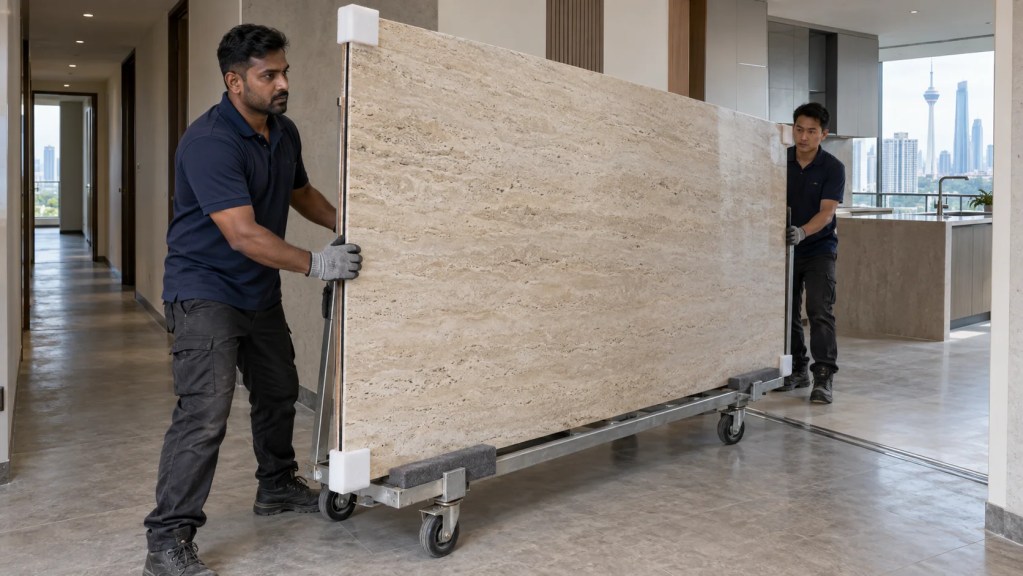
- Fabrication needs skill. Cutting large, thin slabs takes the right tools and experience. Cheap installs are where most problems start, which is why we also warn homeowners about buying sintered stone from China without a local installer.
- Every slab looks similar. Natural travertine is one of a kind. Sintered versions repeat their pattern across slabs, which some people see as a plus (easy matching) and others as a minus.
For the full list, read our honest guide to the disadvantages of sintered stone.
Will the Travertine Look Date Quickly?
Travertine is unlikely to date as fast as a trend colour, because it has been used in buildings for over two thousand years. The Colosseum in Rome is built largely from it. What does come and go is how it is styled. Pairing a travertine top with timber cabinets, brushed brass or soft white keeps it calm and timeless, whilst very trend-driven pairings may feel tired sooner.
If you are unsure, use travertine where it has the most impact and is easiest to change, such as an island top or vanity, and keep larger areas neutral.
FAQ
Does travertine sintered stone need sealing? No, travertine sintered stone does not need sealing, because its surface is almost non-porous and spills sit on top rather than soaking in. Wipe it with a mild detergent and water, and it stays clean.
Is travertine sintered stone the same as natural travertine? No, travertine sintered stone is a manufactured slab that copies the look of natural travertine. Natural travertine is a quarried limestone with real pits and holes, whilst the sintered version is non-porous, harder and resistant to acidic food.
How much does travertine sintered stone cost in Malaysia? Travertine sintered stone at Sinno costs from RM110 per sqft supplied and installed for Moca Compact designs, up to RM351 per sqft for Dekton Marmorio and Sabbia. Slabs alone start from RM1,600 each.
Is travertine sintered stone good for a bathroom vanity top? Yes, travertine sintered stone is one of the most popular vanity top choices right now, because it does not absorb water, resists soap and cleaner stains, and needs no sealing. The warm tones also suit spa-style bathroom designs.
Can travertine sintered stone be made into an integrated sink? Yes, travertine sintered stone can be fabricated into an integrated sink, with the basin cut from the same slab and joined with mitred edges so the pattern runs unbroken from top to bowl. It costs more than a standard basin and needs a skilled fabricator for clean joints.
Conclusion
Travertine sintered stone is popular for a simple reason: people love the warm Roman look, and sintered stone finally makes that look practical for how Malaysians cook and live. You get the soft beige tones and gentle banding without sealing, staining or etching, starting from RM110 per sqft.
It is not flawless. Treat the edges with care and choose an installer who knows the material. Want to see the difference between the designs in person? Ask us for samples and put a Moca Compact and a Dekton travertine design side by side in your own kitchen light before you decide.